

Overall Rating
- Uphill performance(5)
- Downhill performance(4)
- Thermal insulation(4)
- Ease of use(5)
- Design and functionality(5)
Summary
A completely new model to convincingly preside over the light touring category. A boot designed to maximise performance on the ascent but which performs well in terms of the comfort and safety it provides on the descent. To use an automotive term, it could be described as a grand touring model; a successful mix of performance and comfort.
Pros
- Lightness
- Uphill performance
- Leg angle
- Speed in ascent/descent transition
Cons
- Delicate locking lever string
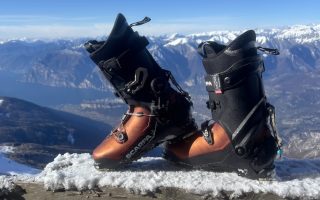
The La Sportiva Kilo is the model that allows the Trento-based company to complete its range, the missing link between the Skorpius and the Raceborg. Many of its competitors already had a similar model, now La Sportiva also has a boot of this type and, as was easily predictable, it is an excellent product.

Technical features of the La Sportiva Kilo
- Weight: 1,000 g size 26.5, 1,208 g size 28.5 tested by us
- Leg angle: 70°.
- Tilt of cuff: 12/14°
- Last: 101 mm
- Shoe: O2 Kilo
- Shell material: Grilamid Bio Based LF Carbon
- Cuff material: Grilamid Bio Based LF Carbon
- Sole: FriXion Wave Alpine
- Link to the manufacturer
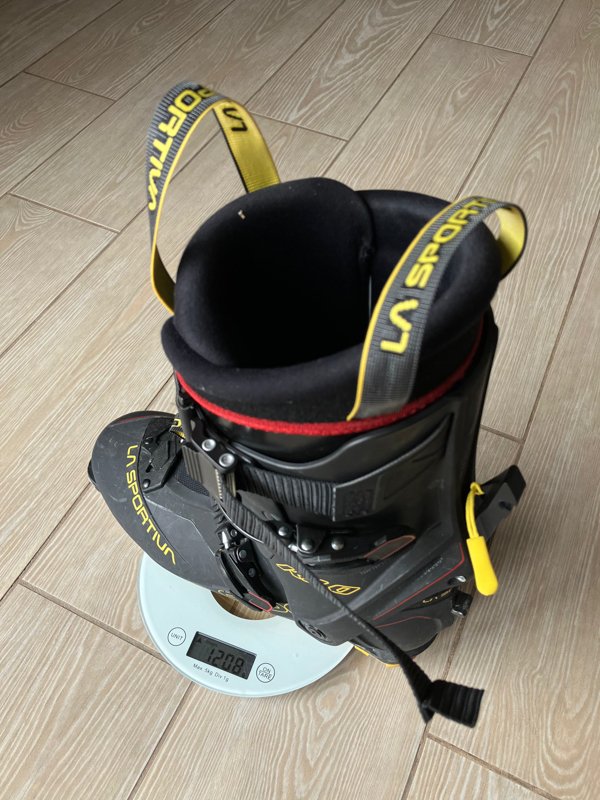
Shell and cuff
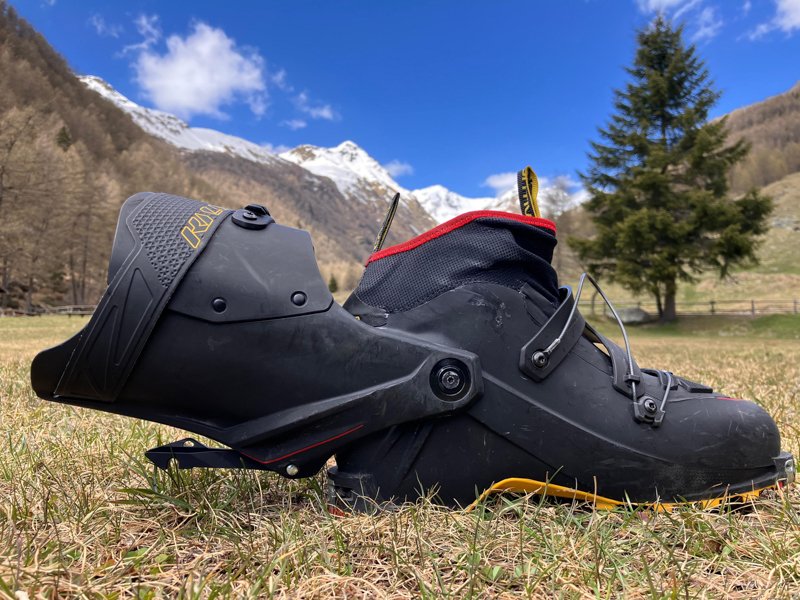
In the La Sportiva Kilo the shell and cuff are two distinct elements, just like in race boots. Both are made of Grilamid Bio Based LF Carbon; the Grilamid Bio is enriched with castor fibres, which help to maintain the stiffness characteristics when the temperature changes.
Very interesting are the lateral ‘ribs’ that start from the two lateral pins of the cuff and join into a single rib on the calf. They help to guarantee the rigidity and support necessary for the descent, given the absence of the ‘tongue’.
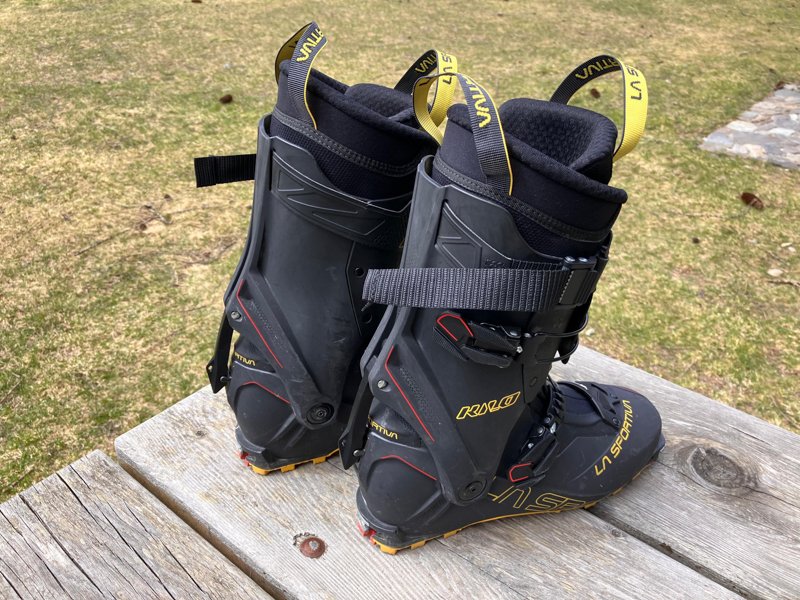
The shell has a very low gaiter that sits flush with the plastic of the cuff to protect the boot from snow during descent.
Liner
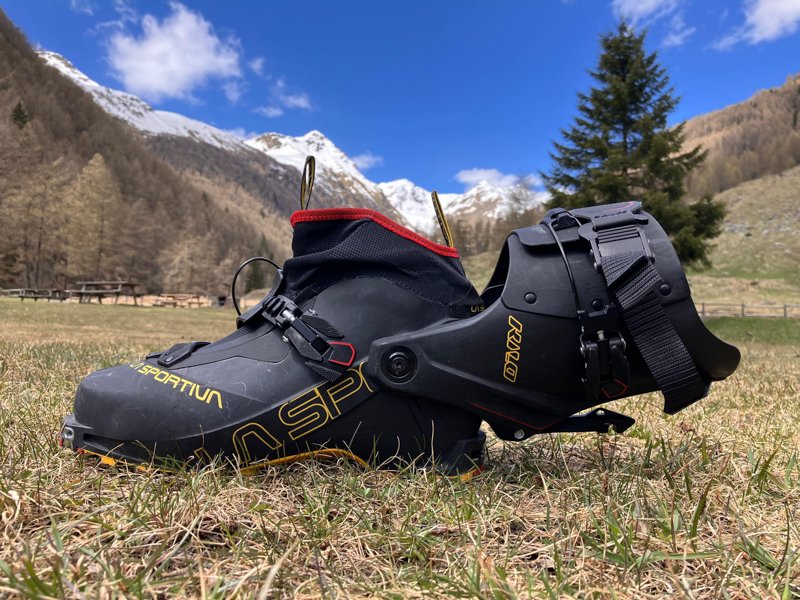
The O2 Kilo liner is not exactly minimalist like many of the boots in the Light category and provides unusual comfort for this type of boot.
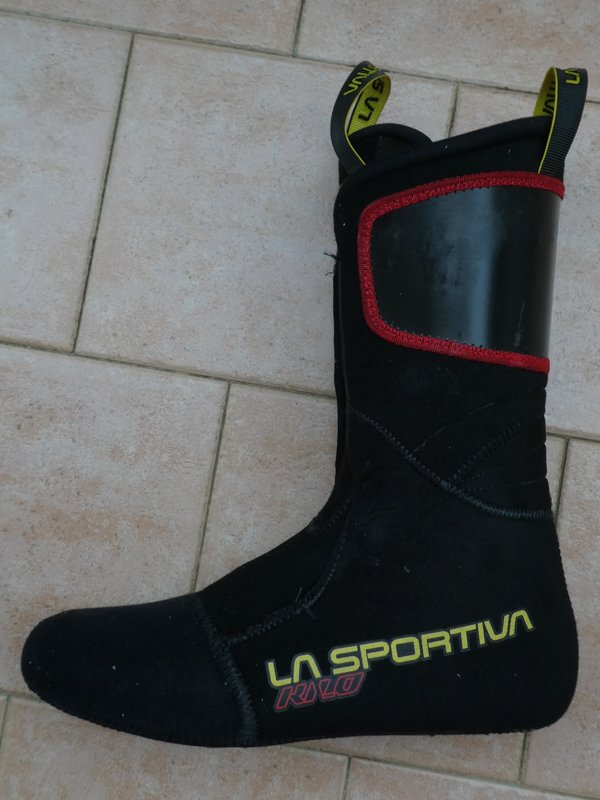
In particular, the boot offers good mobility when walking and the two reinforcements, one on the tongue and one on the calf, ensure excellent support when descending.
Sole
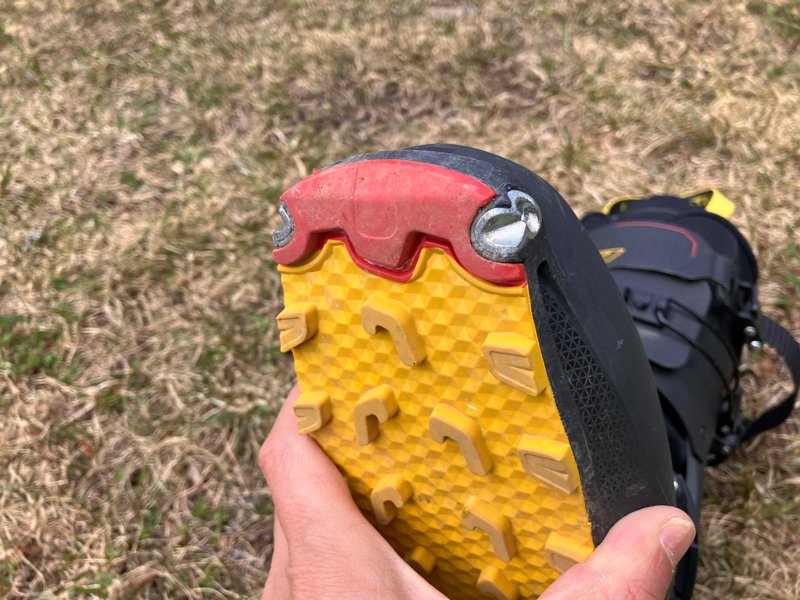
The Sole was made in-house by the Trento company and is called FriXion Wave Alpine.
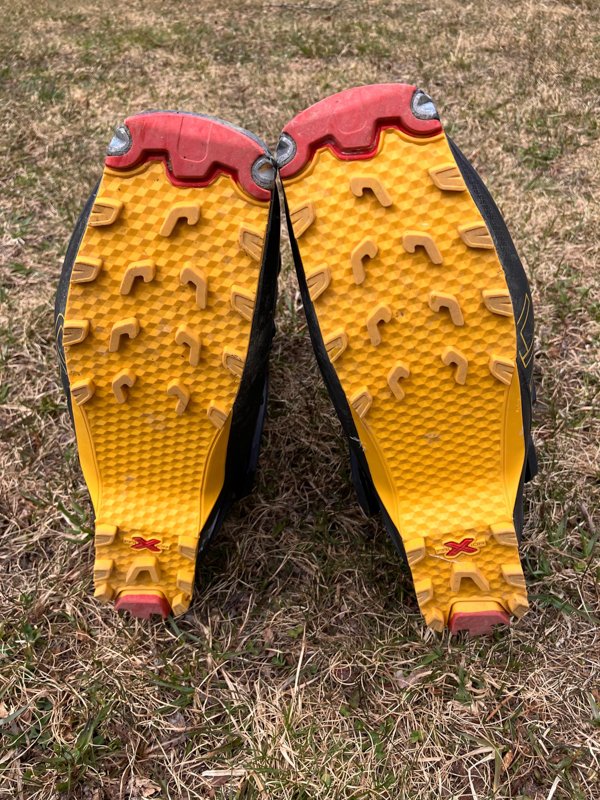
The feeling I experienced while walking was excellent, both on snow and on the trail, the result of an excellent combination of tread and tyre properties.
Test mode
I was able to test the La Sportiva Kilo between February and May for a total of about 15 outings, during which I found both typical winter conditions (powder and hard snow) and spring conditions (firn and transformed snow).
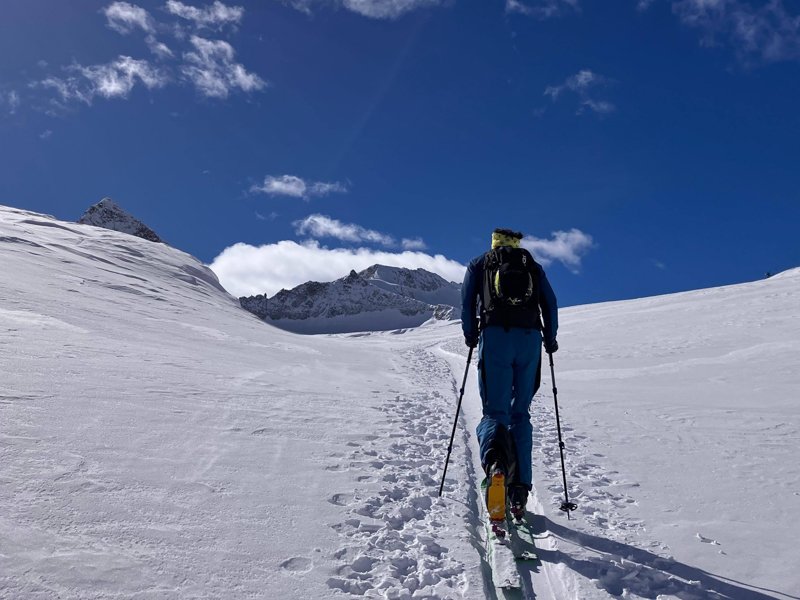
The test was carried out in combination with the following skis:
- Blizzard ZeroG 85
- Black Crows Navis
- Majesty Superpatrol
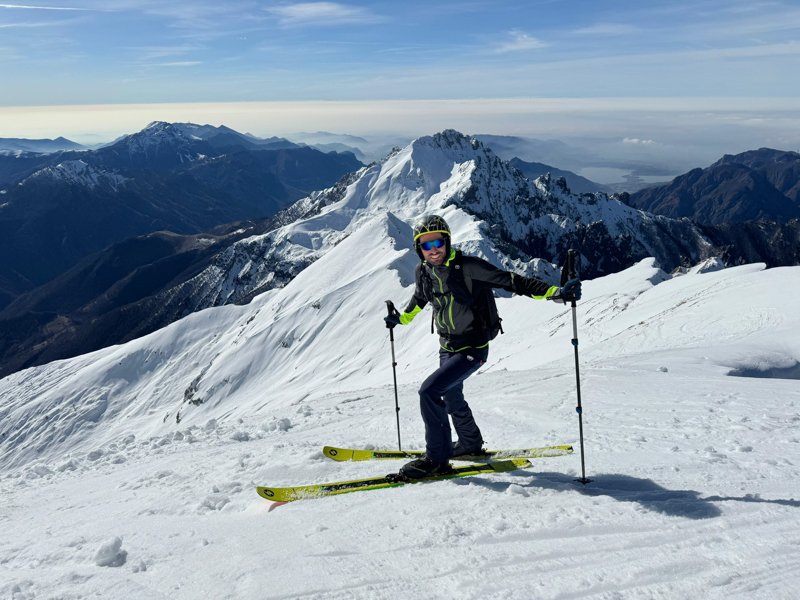
La Sportiva Kilo on-site test
Foot entry
Foot entry can take place in two ways:
- Leaving the shoe in the shell
- By pulling the shoe out and, once it has been fitted, slipping it into the shell
Personally, having a skinny foot, I have not experienced any difficulty with the first metodo.

The thing that amazed me the most, having used both a pair of Spitfires and a pair of Skorpius, were the internal volumes, which had definitely increased compared to the two models mentioned above.
The uphill behaviour
Climbing performance is definitely the Kilo’s strong point. The 70° leg angle and minimal mechanical friction guarantee an ease of walking comparable to a race model.
The behaviour when walking without skis is also very good, which is essential during tours with alpine sections or in spring, when a bit of shouldering is often unavoidable.
The La Sportiva Kilo downhill
The transition between the uphill phase and the downhill phase is done simply by operating the lever located behind the calf and slightly flexing the cuff so that the latter engages in the support.
I really appreciated the fact that the spring system connected to the lever is entirely ‘embedded’ in the plastic of the cuff; this expedient prevents problems in the event of ice formation or shocks due to a fall.
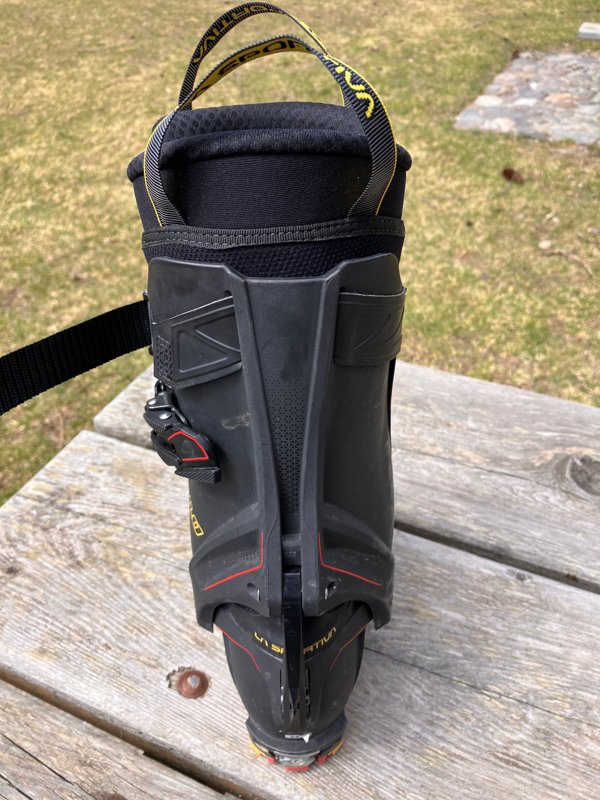
The fastening system consists of two classic hooks , one on the metatarsus and one on the cuff, plus the Booster Strapthat helps support the cuff.
The hook on the metatarsus is combined with a cable that helps to distribute the tension over a wider area, guaranteeing an effective lock.
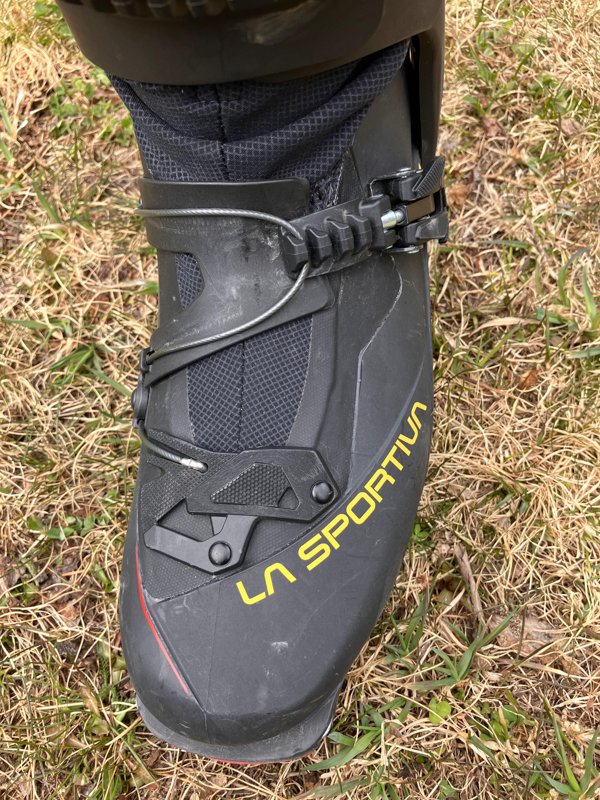
Both hooks are adjustable, providing a decent range of customisation, which is uncommon on boots in the light category. With a couple of test rides, I found the correct setting for my foot.
I found the ergonomics of the levers very good, which are always easy to operate even with thicker gloves.
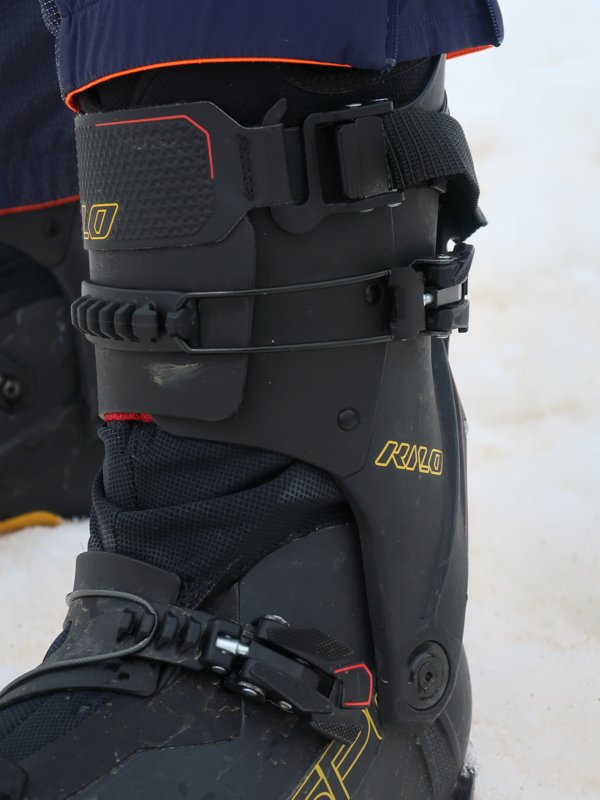
Initially I was sceptical about the Kilo’s progressive flex (the elasticity it gives back once loaded forward): it seemed that it was not rigid enough. Instead, while skiing, I never had the feeling of insufficient support; on the contrary, this elasticity helps in the exit in turns.
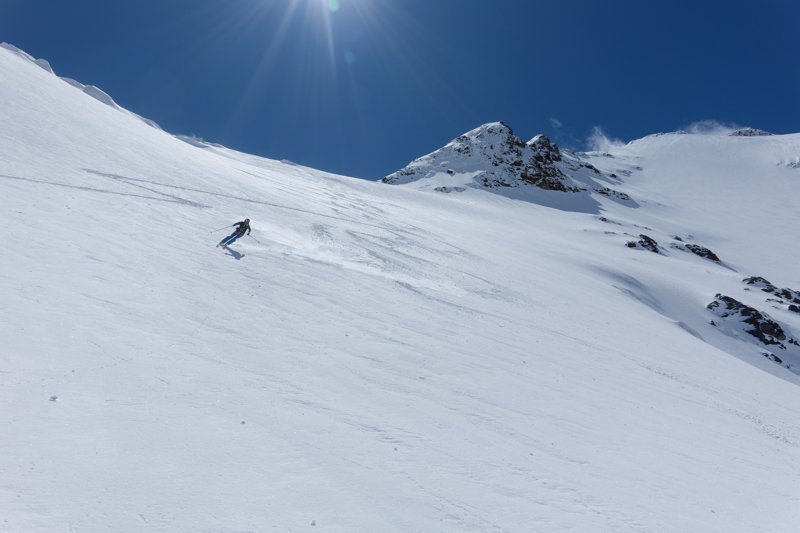
The standard inclination of the cuff is 12°. This setting is not ideal for my skiing technique as it shifts the centre of gravity too far back, making my quadriceps fatigued. In any case, setting the inclination to 14° solved this problem and I feel perfectly at home on it.
Don't miss the next reviews!
Receive product tests for your mountain activities by email.
Fit of La Sportiva Kilo
As I have already said, compared to other La Sportiva models (Spitfire and Skorpius), I have noticed that the internal volumes are larger. Personally, I have a Mondopoint size of 285 millimetres and this is what I have always bought for the other La Sportiva models. However, with the Kilo I realised that the fit is more generous and that it would have been better to take half a size smaller.
I cab say that the Kilo is not a particularly good boot for skinny feet.
Recommended for
The La Sportiva Kilo is a boot that I recommend for those who want to tackle tours with significant development and elevation gain. Even in the presence of mountaineering sections where a light boot with a good fit is important.
It is a high-performance boot on the ascent, which also offers guarantees on the descent. With a comfort that allows you to have it on your feet for 7 or 8 hours without any problems.
Obviously the perfect combination is with a light ski (with a width of less than 90 mm), but it can also offer satisfaction with skis in the tour category. Not suitable, however, in combination with a free-touring ski such as the Navis.


1 Response
I find this review to be far from through. The heel pocket is really narrow. For me, with a narrow ankle, I find it a bit narrow. A friend with quite a large foot has problems with these boots because of the narrow heel box.
Also, the forward lean angle is not as advertised or stated on the boot. The boot has a straight upright calf with no forward lean. And the bigger problem is that the lock plate in the back is already in the more aggressive forward lean. So if you rotate the lock plate you will end up with a negative lean angle.