Overall Rating
-
Uphill performance
(3.5)
-
Downhill performance
(4.5)
-
Thermal insulation
(4.5)
-
Ease of use
(5)
-
Walking behavior
(4.5)
Summary
When “light” evolves into “touring.” This sums up a boot that has been radically redesigned from its original model to specifically enhance downhill performance. The weight—and price—have been adjusted accordingly.
Pros
- Support and precision on descents
- Snug, fully adjustable fit
- Bidirectional micro-adjustment with Boa
- Quick switch between ascent and descent modes
Cons
- Weight above the segment average
- Limited leg travel
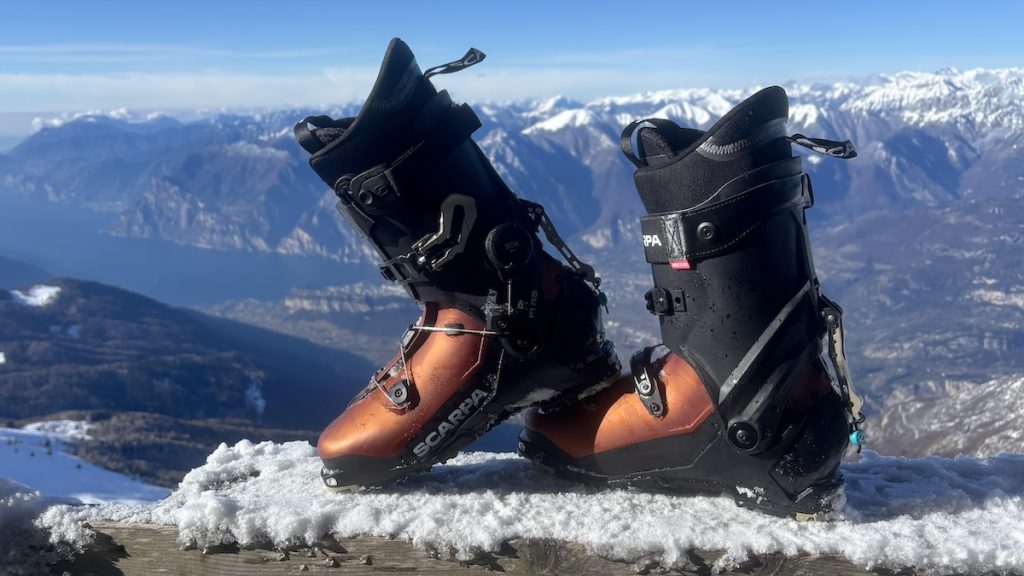
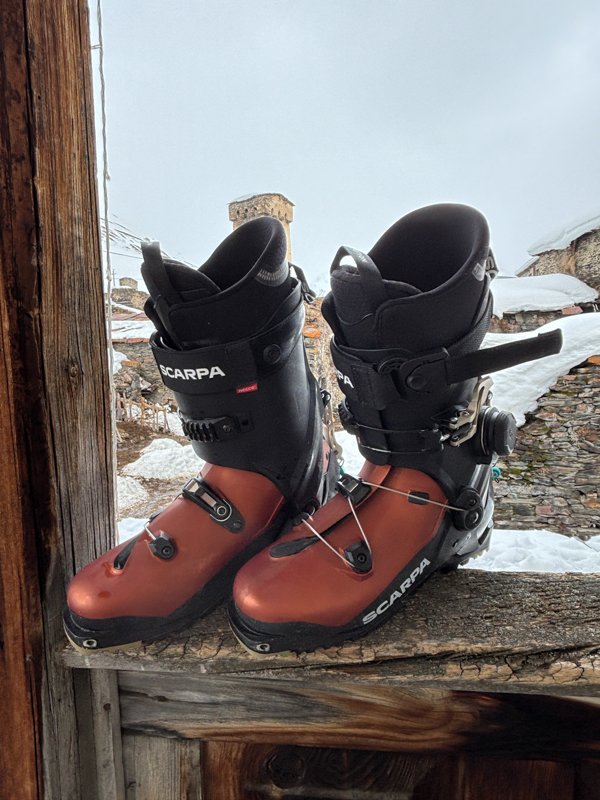
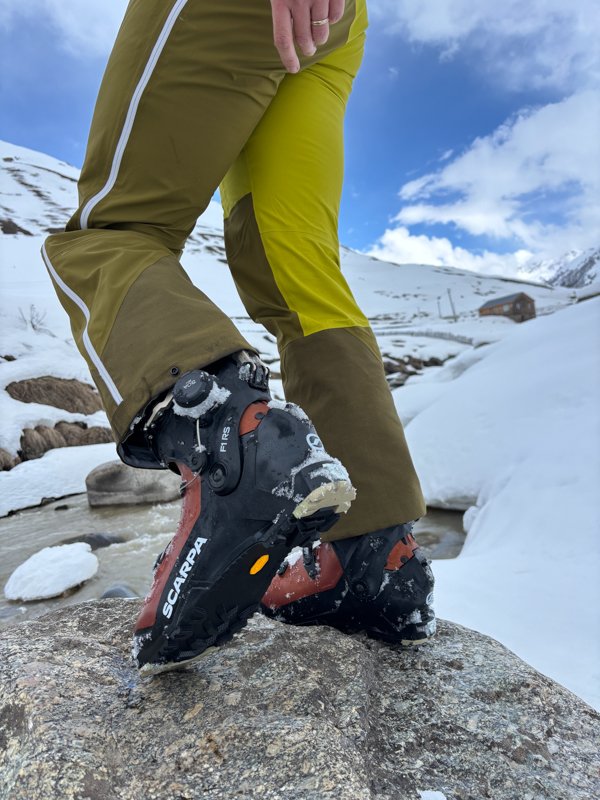
With the new F1 RS, Scarpa has radically reimagined one of the best-known models in its ski mountaineering lineup. In fact, despite being part of the F1 family, the model features a completely redesigned construction, developed to combine efficiency on the ascent with support on the descent.
The main new features are the Overlap Flow shell, the Boa H+i1 system repositioned laterally, and a structure that improves foot containment without compromising cuff mobility. Winner of the 2026 Prowinter Award in its category, it falls within the touring segment, positioned between the lightest models in the F1 family and those most geared toward downhill skiing.
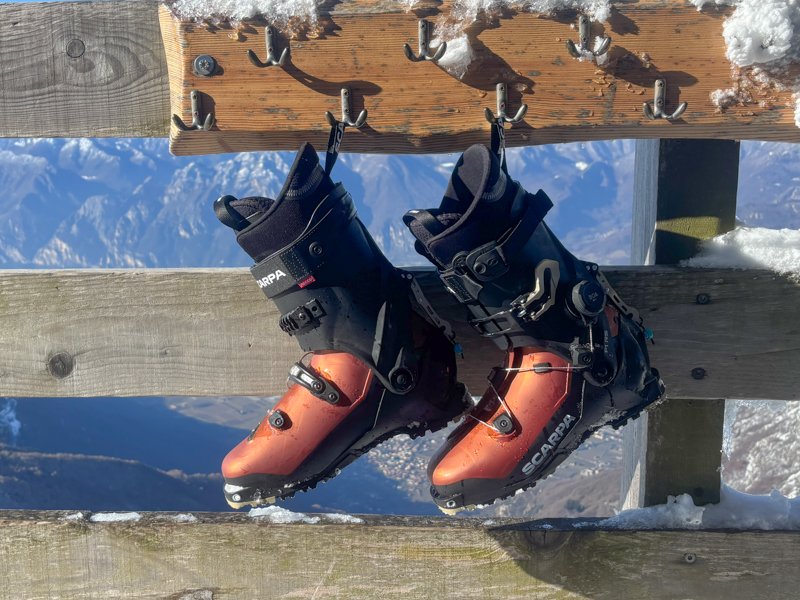
Technical features of F1 RS
- Overlap Flow Shell Construction
- Boa H+i1 closure with four-point bidirectional micro-adjustment
- Adjustable toe lever and Power Strap with Recco reflector
- FS Tour liner in thermoformable Intuition Foam
- Pebax Renew shell with Grilamid Fiber Glass LFT technology
- Specified cuff range of motion: 61°
- Vibram FS outsole
- Specified last width: 101 mm
- Specified weight: 1340 g in size 27 MP
- Measured weight: 1393 g in size 29 MP
- Country of manufacture: Italy
- List price: €729,95
Test mode
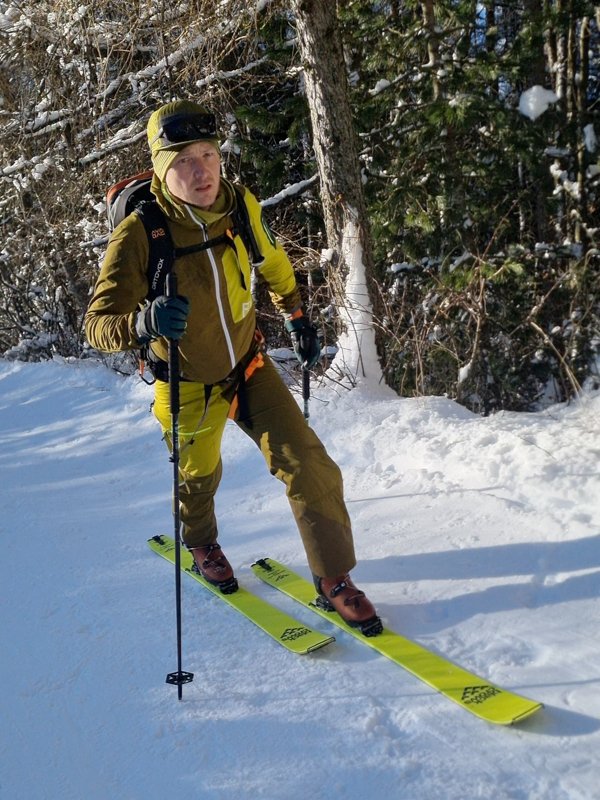
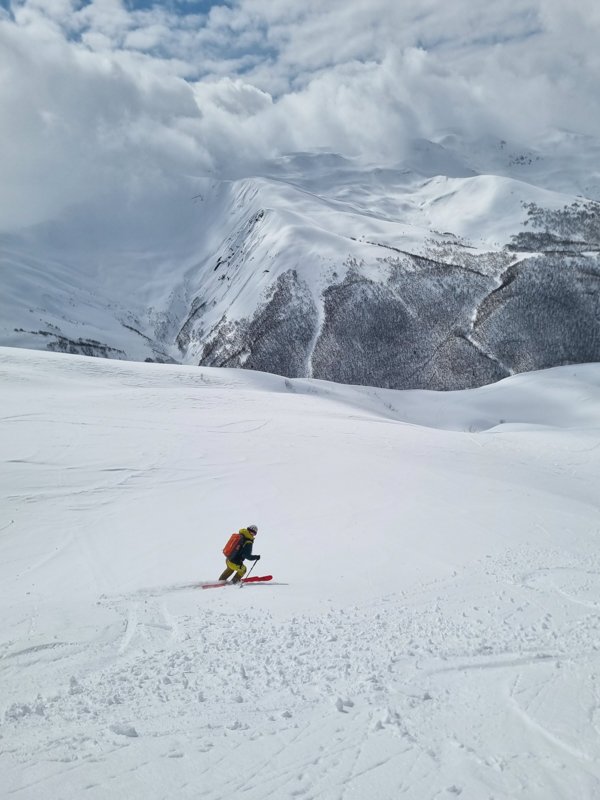
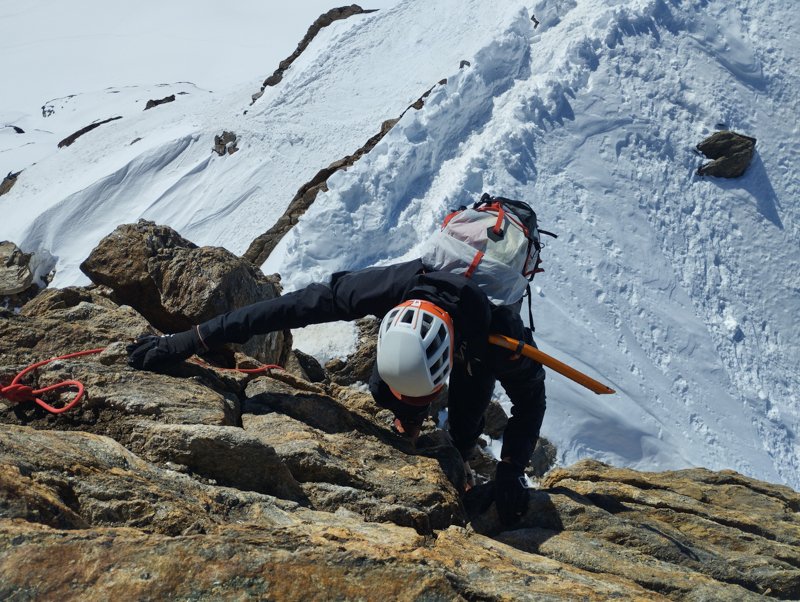
I tested the Scarpa F1 RS boots during the first half of 2026, on about thirty outings with elevation gains ranging from 700 to 1,800 meters. Conditions varied widely, from fresh snow to wind-blown and icy snow, all the way to transformed spring snow. I also used the boots on the trail and on short mountaineering sections with crampons.
The test was conducted using two Black Crows skis: the Camox (96 mm waist) and the Orb (90 mm waist), both equipped with ATK Raider 12 bindings. Comparing them with other Scarpa models I’ve used before—particularly the F1 XT and Maestrale—allowed me to better evaluate their characteristics.
F1 RS on-site test
Overlap Flow Construction and Comfort
The main innovation of the F1 RS is the Overlap Flow construction, which replaces the traditional front tongue with an overlapping shell structure. Together with the Boa system and the inner liner, this solution distributes pressure and improves foot support.
The fit is snug, yet free of localized pressure points, with good freedom of movement while walking. Compared to other Scarpa models we’ve tested, the F1 RS offers a particularly well-balanced combination of comfort, a natural walking feel, and power transfer to the ski.
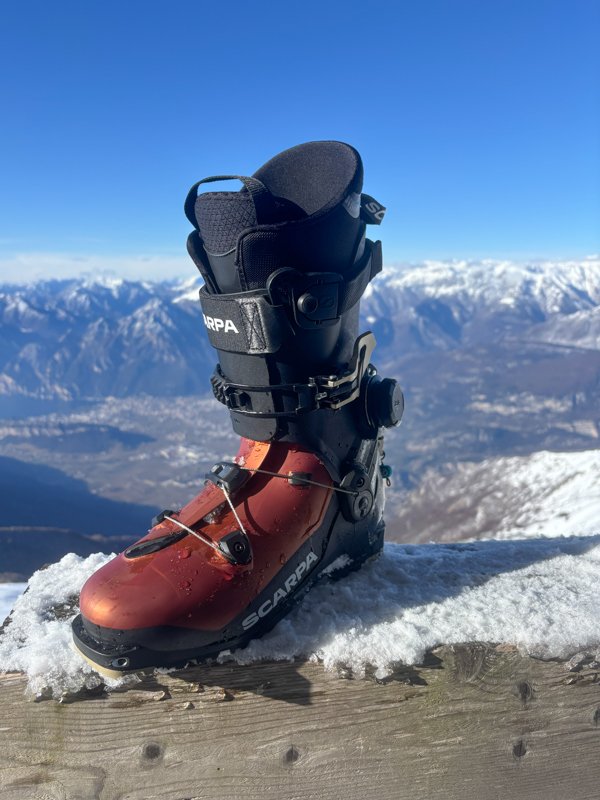
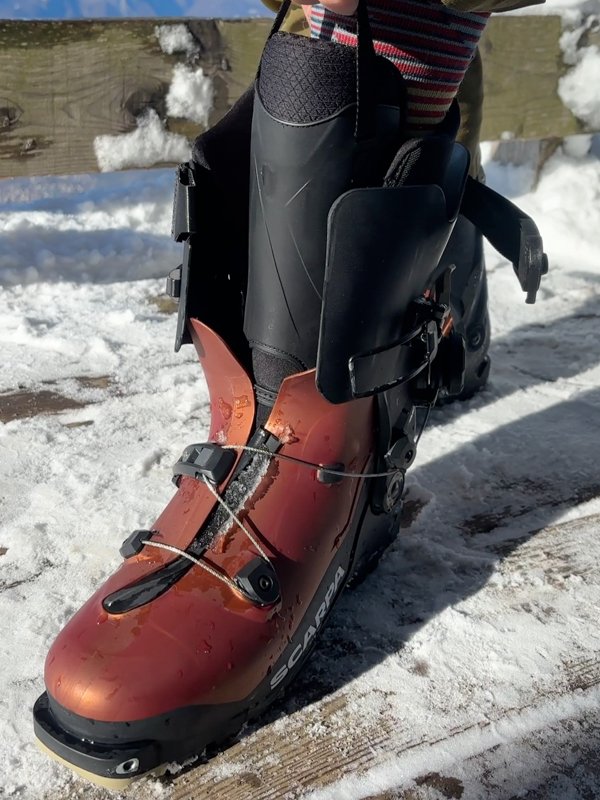
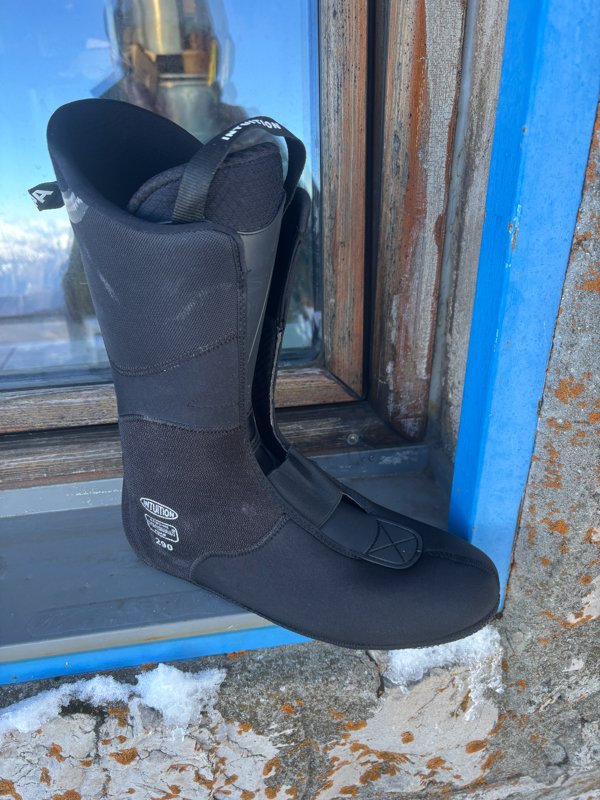
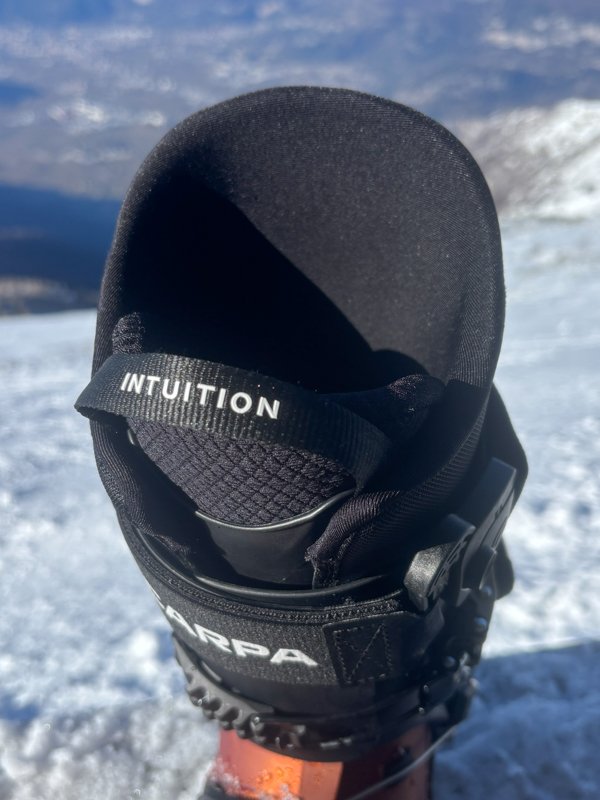
The FS Tour liner, made of thermoformable Intuition Foam, features a stretchy tongue, two straps to facilitate putting on the boot, and a reinforced toe box that protects the area most exposed to friction. During testing, comfort remained high; only during the first two or three outings did I experience slight discomfort on the inner ankle during descents, which then disappeared.
Ankle Mobility and Ascent
In walking mode, the F1 RS offers a stated range of motion of 61°. This figure isn’t particularly high compared to some competitors, especially given the limited rear extension caused by the Boa cable.
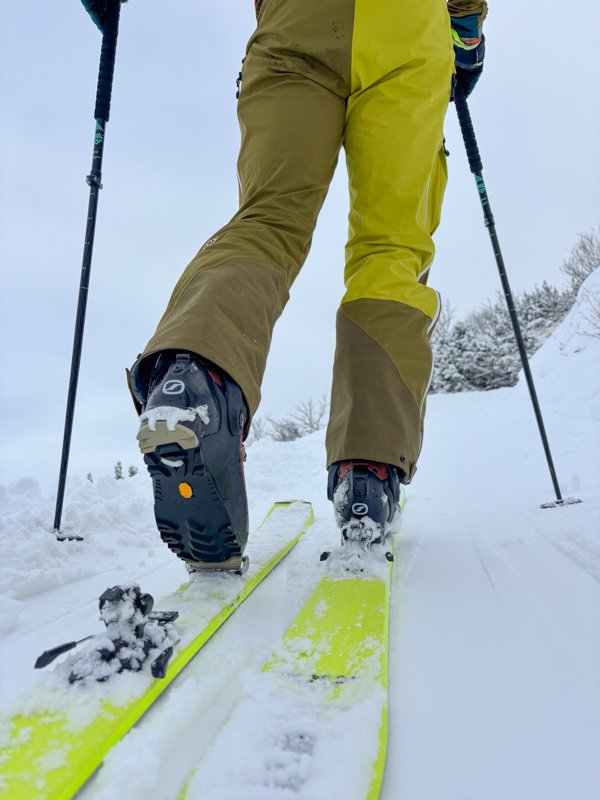
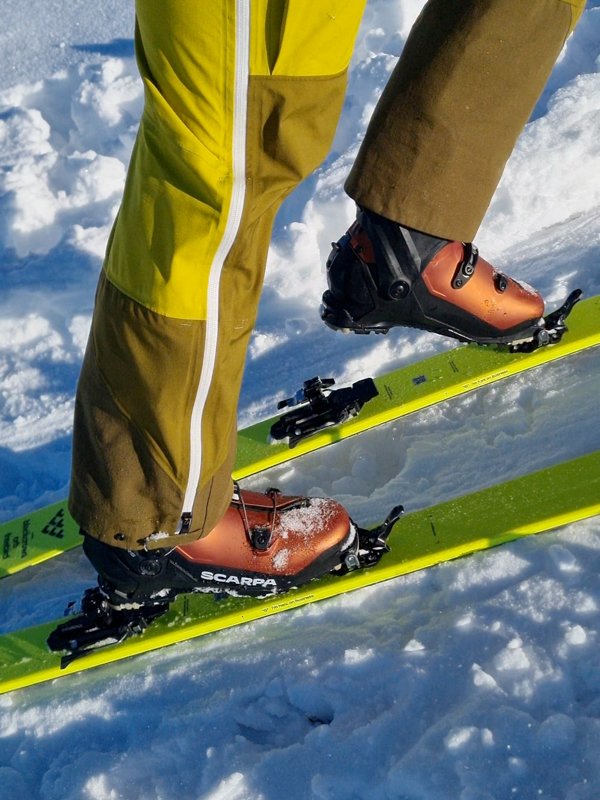
However, the feel during movement is better than the specs suggest. Reduced mechanical friction promotes smooth movement, with good mobility, especially in forward flexion.
Compared to the Maestrale, which has a similar nominal travel, the F1 RS offers greater freedom of forward movement. It doesn’t match the mobility of the lighter F1 models, but it offers a compelling compromise given its greater support on descents.
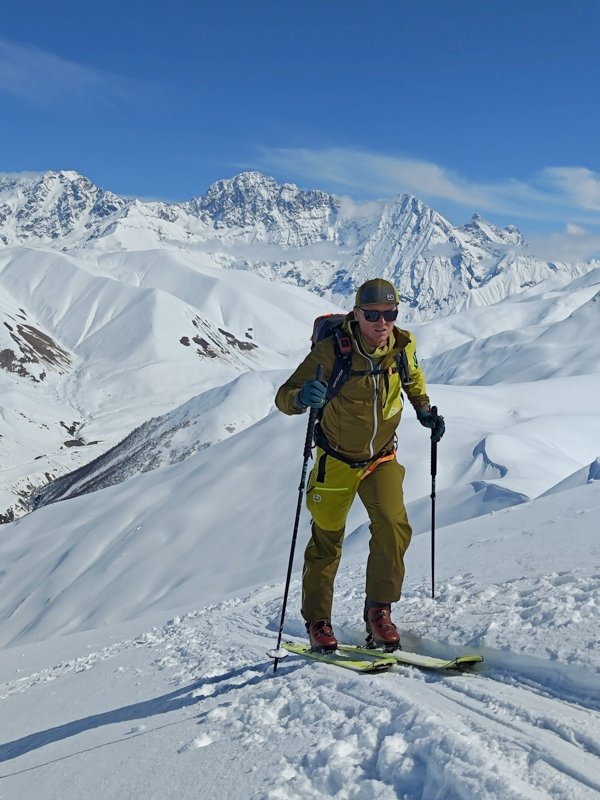
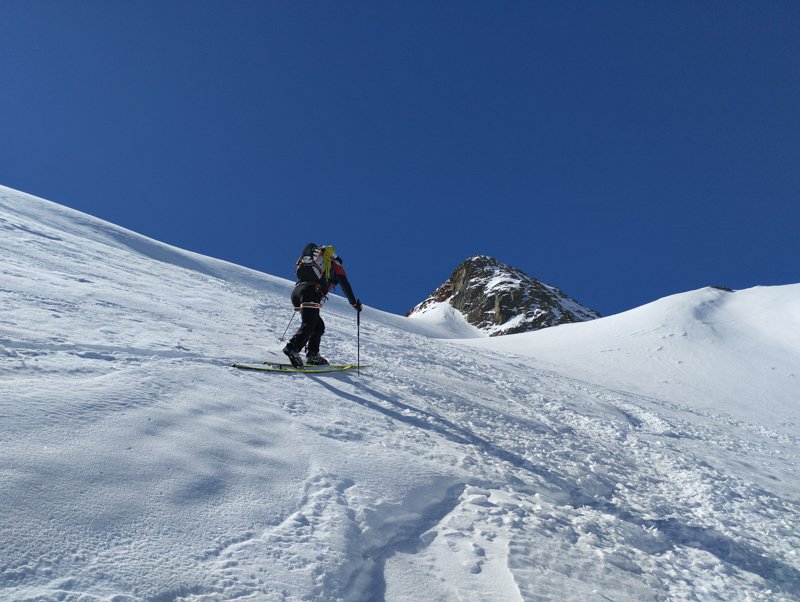
Adjusting the Boa system initially takes a few tries to find the most comfortable fit. Once you’ve found it, the bidirectional micro-adjustment lets you adjust it quickly. Even on steep and icy sections, the ankle support proved effective, maintaining good sensitivity when controlling the skis and edges.
Walking, Outsole, and Crampons
The Vibram FS outsole combines Durastep and Traction Lug technologies with a pattern designed to enhance traction. The slight rocker makes walking on hard terrain feel more natural.
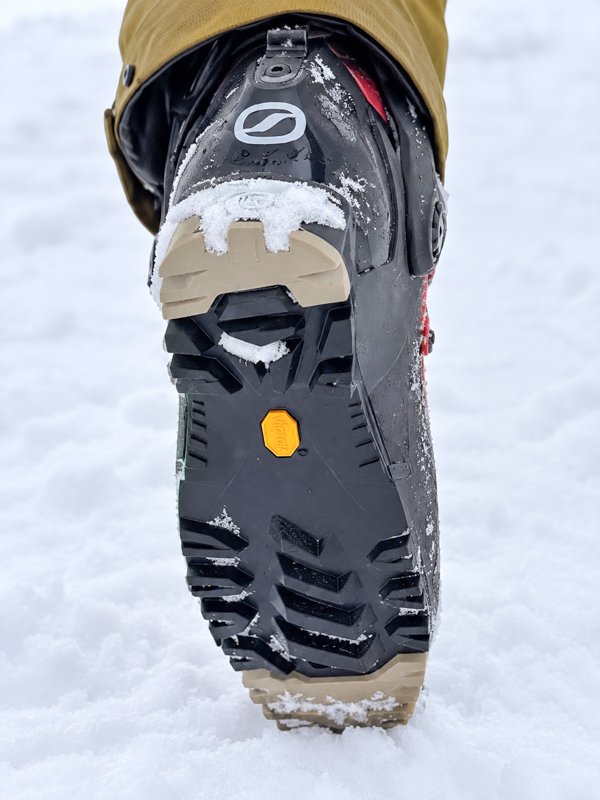
During testing, it demonstrated good grip on rock and snow, with sufficient cushioning on compact surfaces. The slim shape of the shell makes it easier to position the foot during technical sections.
This boots were also used with Petzl Irvis Hybrid automatic crampons on short stretches of easy mixed terrain. The shape of the heel required careful adjustment of the rear strap, making it take a little longer to secure the crampon. Once the correct position was found, the crampon remained securely in place at all times.
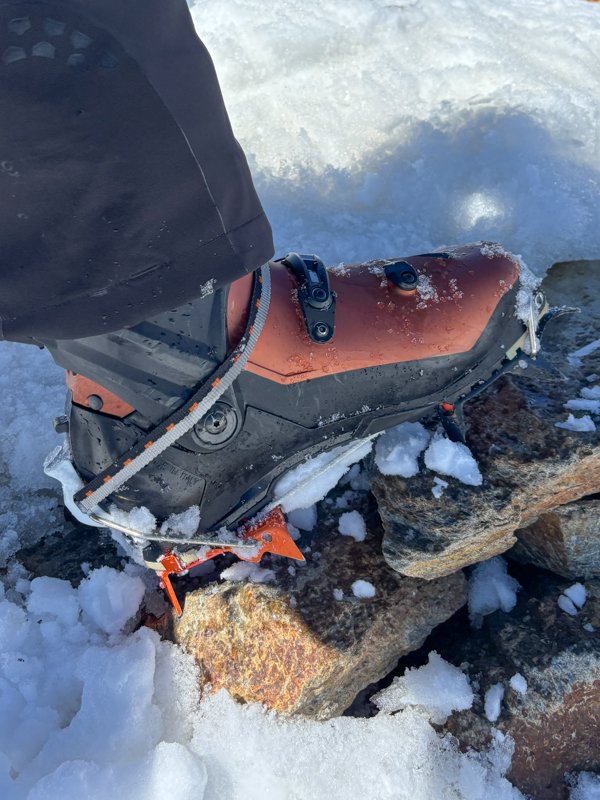
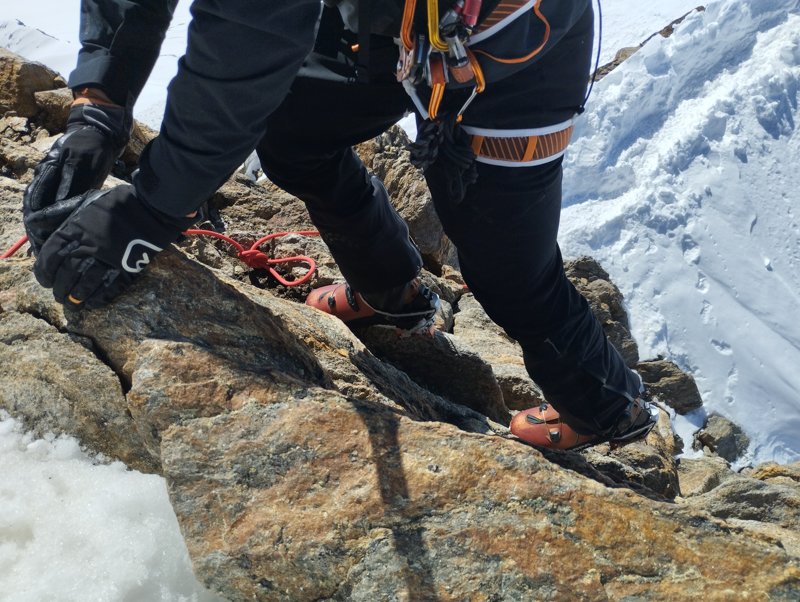
After use, no abnormal wear on the sole has been observed, and the sole can also be replaced at authorized service centers.
Switching from Ascent to Descent Mode
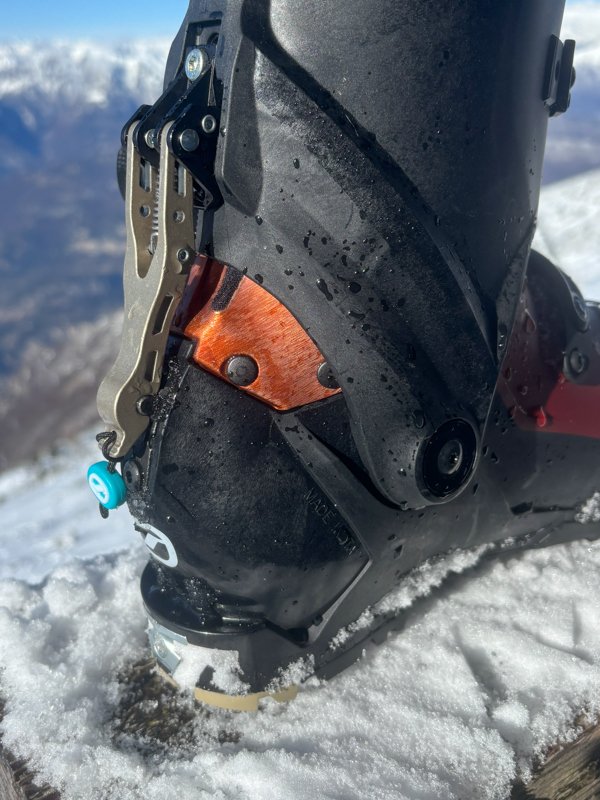
The mode change is performed using a rear lever that locks the crampon via a hook on an external pin. This system is simple: just lower the lever until it clicks into place.
The exposed pin prevents snow and ice from accumulating in the mechanism, ensuring its reliability. During testing, the switch between the two modes proved to be quick and intuitive.
Boa H+i1 System and Adjustments
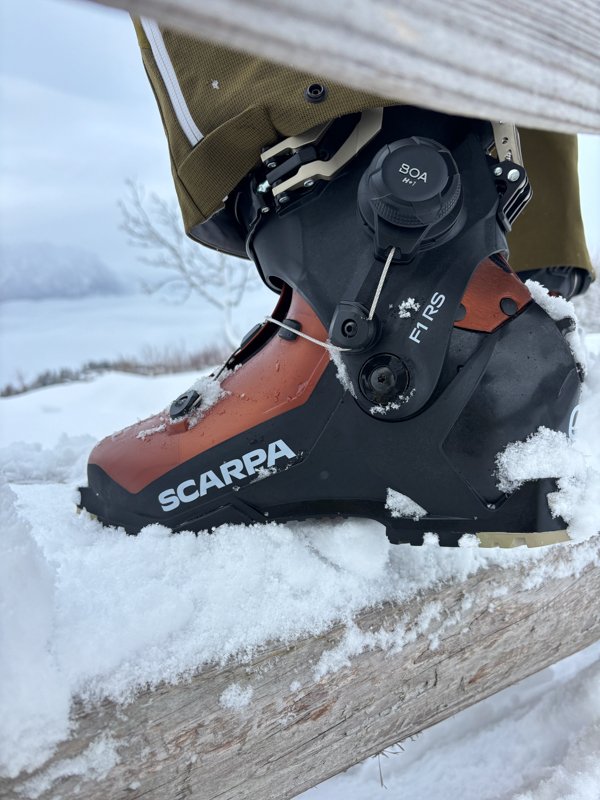
One of the key innovations involves the Boa H+i1. Compared to previous Scarpa models, the rotor has been moved to the side and acts on four points between the forefoot and the ankle, distributing the tightening force evenly.
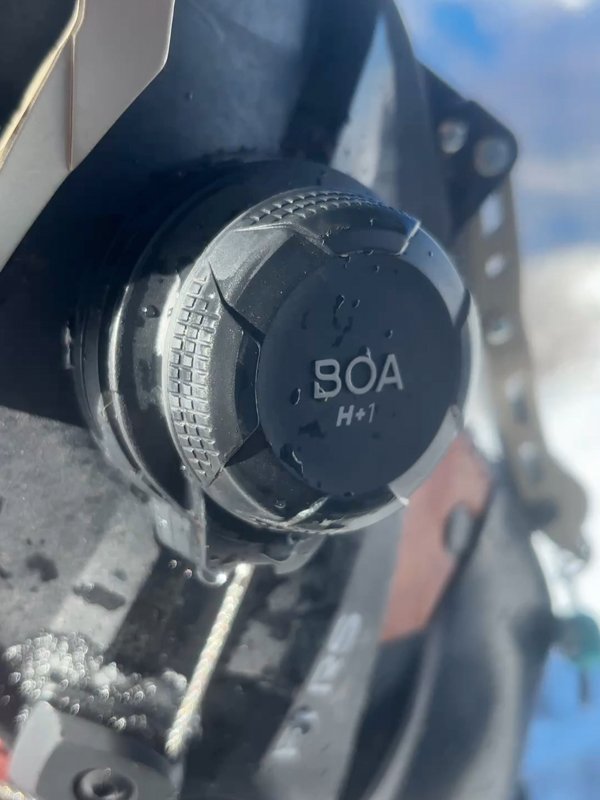
The main advantage is the bidirectional micro-adjustment: tension can be increased or decreased directly via the rotor, without completely releasing the cable. This is a useful solution for adjusting the fit throughout the day and when changing your riding position.
During testing, it performed reliably even in freezing temperatures and heavy snowfall. When ice formed, simply turning the control was enough to restore its function. It’s also easy to use while wearing gloves.
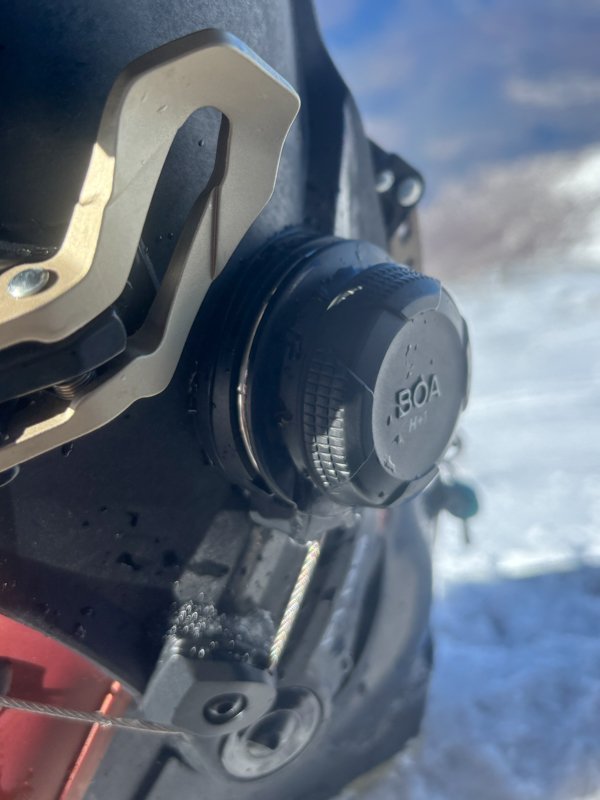
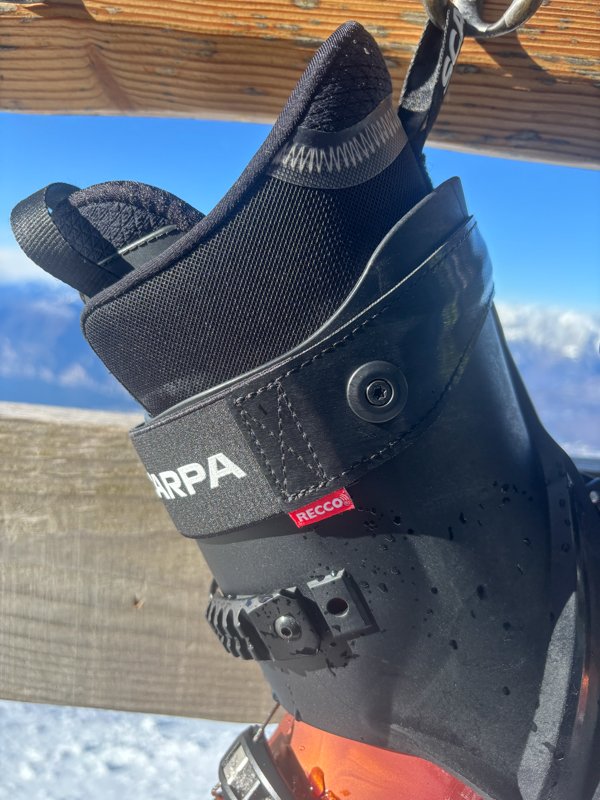
The upper closure features a three-position adjustable lever and a Power Strap with a Recco reflector. Together with the Boa system, these allow for separate adjustment of foot containment and shin support.
Stability and Downhill Performance
It’s on the downhill where the F1 RS really showcases the most impressive results of its new construction. Once the cuff is locked and the Boa and Power Strap are adjusted, the boot provides a feeling of stiffness and stability that exceeds what one might expect from a model with this setup.
The Pebax Renew shell, featuring Grilamid Fiber Glass LFT technology, contributes to torsional and longitudinal stiffness, promoting direct power transfer to the ski.
The Boa system provides effective support across the instep and ankle. Compared to the Maestrale’s HRS system, the initial ankle wrap is less pronounced, but the overall support remains high and the feeling of security increasesrapidly with use.
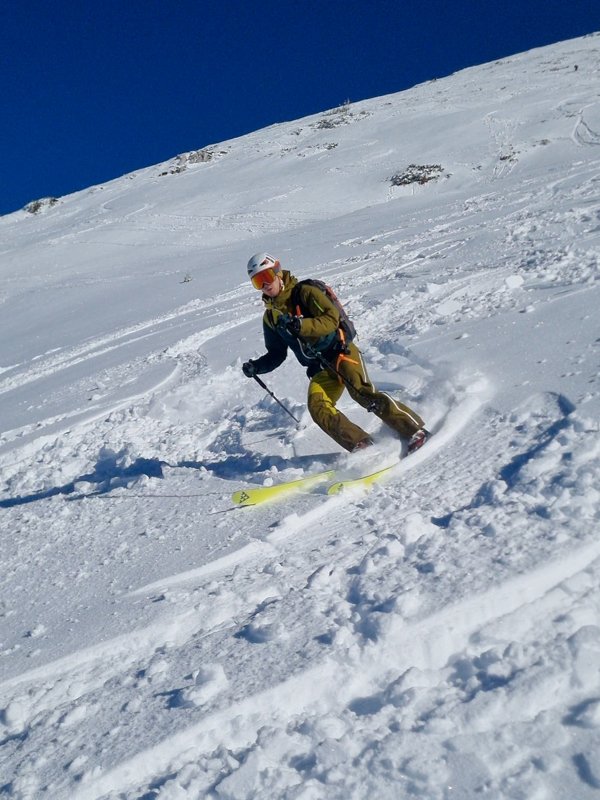
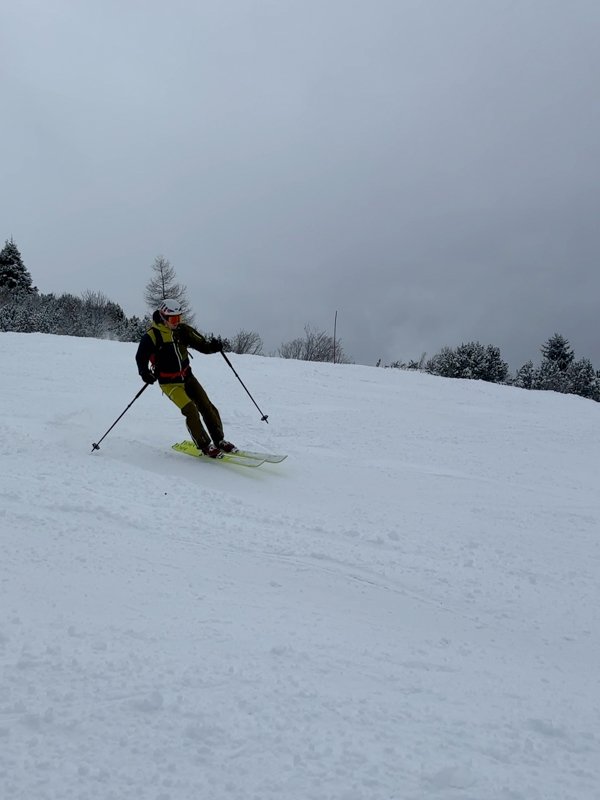
The front reinforcement of the boot contributes to support without reaching the extreme stiffness of downhill-oriented models, such as the Quattro.
Scarpa does not officially specify a flex rating. Based on observed performance, the perceived stiffness is roughly comparable to that of a boot with a flex between 110 and 120, although this is a subjective assessment.
Overall, the F1 RS offers solid and precise performance, with a good progressive response. During testing, it performed effectively with skis measuring 90 and 96 mm at the waist; a consistent pairing is with touring skis with widths ranging from approximately 85 to 100 mm.
Don't miss the next reviews!
Receive product tests for your mountain activities by email.
Fit
The fit of the F1 RS is snug, but leaves plenty of room in the forefoot. I used size 29 MP, the same size used on other Scarpa models and roughly corresponding to a European size 45.
With merino wool ski touring socks, the interior space felt comfortable and the support was effective. The Overlap Flow construction distributes pressure well, but it’s still important to choose the exact size: a boot that’s too loose would compromise control while skiing.
Putting the boot on and taking it off is made easier by the wide cuff opening and the liner straps. The process is straightforward even with thick socks, though it requires a bit more care when the boot has been exposed to the cold for a long time.
Recommended for
The Scarpa F1 RS fallsbetween lightweight, progression-oriented boots and more structured touring models. Compared to an F1 XT, it offers greater support and control on descents, while compared to a Maestrale, it prioritizes a smoother walking experience and a less bulky construction.
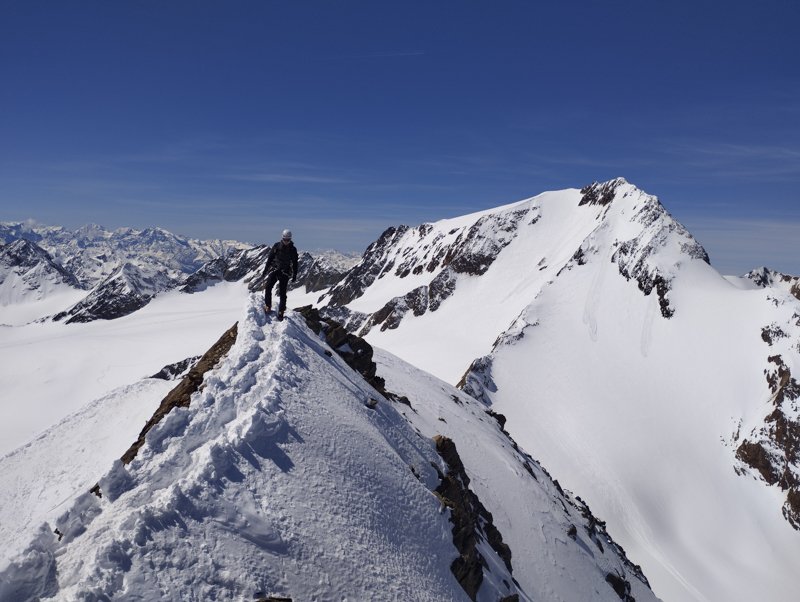
It is particularly well-suited for technical ski mountaineering, with significant elevation gains and varied terrain, without sacrificing precision while skiing.
The Boa H+i1 and Overlap Flow construction make it an attractive option for those seeking an adjustable fit and performance similar to that of a traditional touring boot, but with a greater focus on efficiency on the ascent.