
Interview with Tobias Gramajo from La Sportiva
Fast hiking will definitely be a key trend for summer 2026 for those who want to hike in a lighter way, inspired by what is happening in the world of trail running.
We had a chat with Tobias Gramajo, Product Manager Footwear mountain running/hiking at La Sportiva, who told us how the approach, audience and products have changed, taking as an example an icon such as the Ultra Raptor, which will be completely redesigned in 2026.


Today, hiking seems increasingly influenced by trail running. Is it a desire for speed or lightness?
Today, we talk about lightness not only in physical terms, but also in mental terms. Those who approach the world of hiking are looking for a way to escape, to find themselves.
Fast hiking is not just about speed: it’s about well-being and freedom. This crossover with running is also commercial – because the products are similar and the categories overlap – but behind it there is a genuine need.
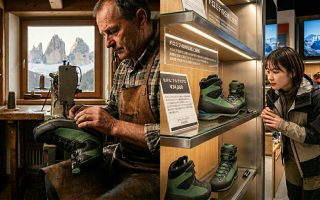
When you walk into a shop, you often find yourself in front of walls full of shoes with labels that only experts can understand. But beginners need guidance. It’s hard to tell whether a shoe is designed for running or fast walking. The truth is that many products today do both.
So would you say that fast hiking today is a bit like trail running five or ten years ago?
Yes, that’s a fair assessment.
Pre-2010, trail running was much more of a niche activity. There were few races, few participants, and people often ran in unsuitable shoes.
Today, everything has changed, especially from the public’s point of view. The product has evolved, but the real acceleration came with the demand: more and more people want a hybrid activity that combines running and walking, nature and the city.
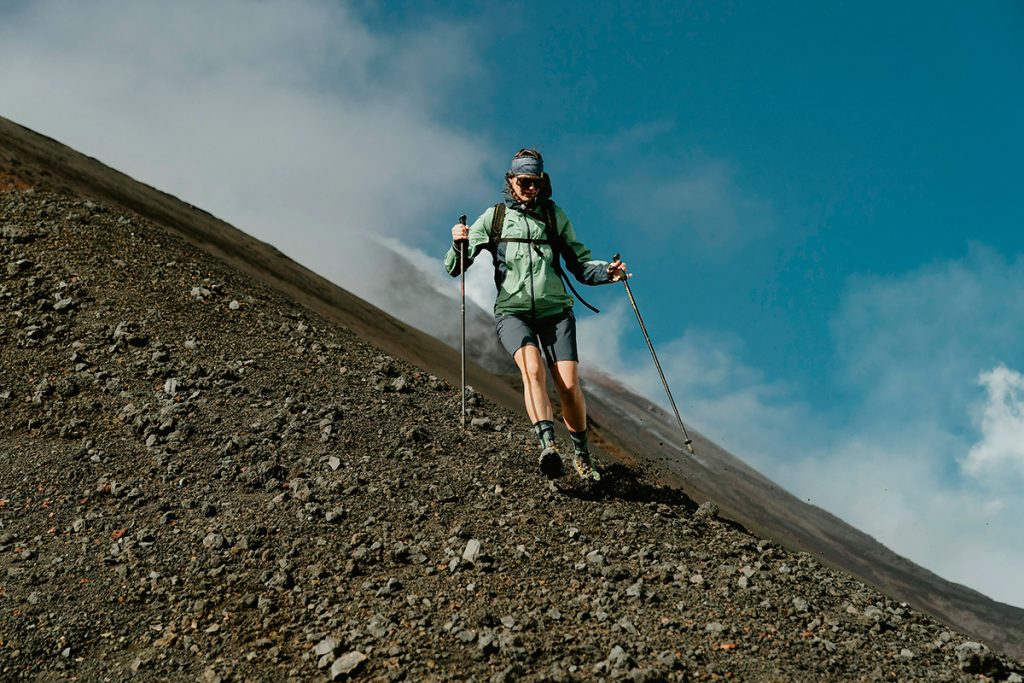
Fast hiking, however, is often misunderstood. It’s not just about “going fast”, right?
Exactly. Fast hiking is a product of our time. It’s the way many active people – busy with work, family and social life – manage to carve out an hour or half a day to switch off.
It’s a simple, direct “escape to the mountains” without too much equipment. And that’s why you need a shoe that’s versatile, reliable and lightweight.
The Ultra Raptor 3 was born in this context: with a strong link to mountain running, but also perfectly suited to fast hiking. Nothing prevents you from running in them, just as nothing obliges you to do so.
Was it an easy decision to revamp a historic shoe like the Ultra Raptor?
Not at all. We approached this project with great respect and a little trepidation.
The Ultra Raptor is an iconic shoe: it has been a driving force in our catalogue for years, both in terms of image and sales.
We didn’t want to betray expectations, but we knew it was time to update it.
We worked on it for a long time, postponing the launch several times to ensure that we retained the key features: reliability, comfort, versatility.
The Raptor 3 is a shoe that wants to appeal to everyone. It has a strong identity, but is suitable for different uses, from those who walk in mixed environments to those who run in the mountains or use it as a technical approach shoe.
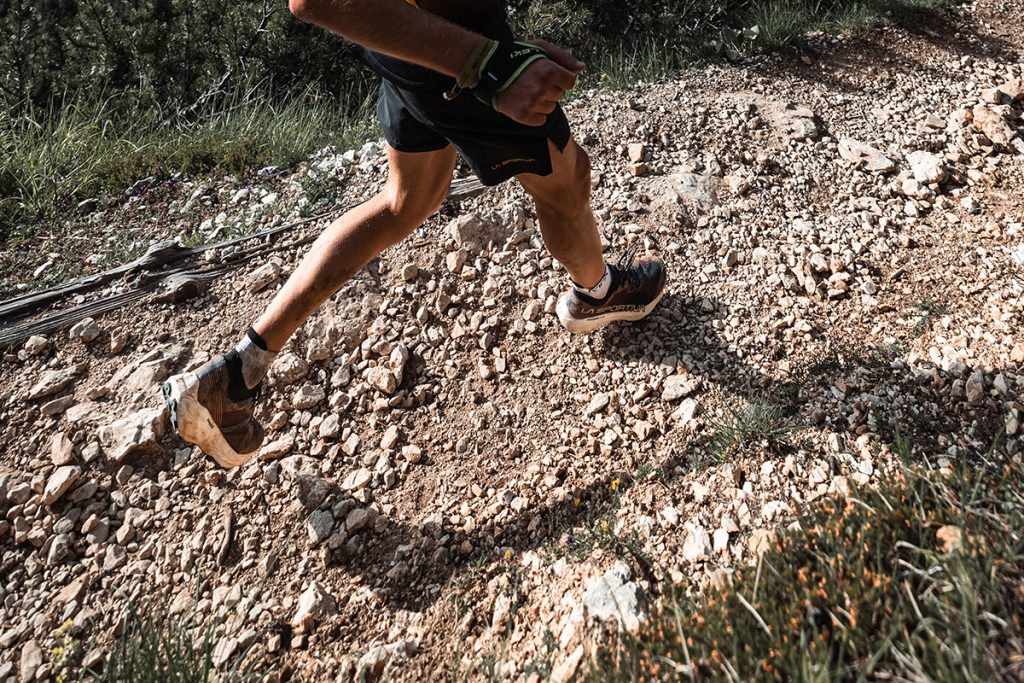
Speaking of materials: do minimalism and lightness go hand in hand with safety?
Manufacturers have a huge responsibility in this. Today, technology allows us to make increasingly lighter and higher-performing shoes without compromising on protection.
The perception of comfort has also changed a lot: today, people want soft, responsive, cushioning materials. But this sometimes comes at the expense of durability. Products from a few years ago lasted longer, of course, but they were also stiffer and often less comfortable.
Now the focus is on balance: protection, comfort and performance must coexist. With the Raptor 3, we have sought to achieve this balance.
We would like to thank Tobias and conclude with our own reflection: sometimes the evolution of a product encapsulates the very soul of an industry. In this case, the Ultra Raptor, which has definitely contributed to creating the light hiking segment, follows its evolution, offering a shoe that seeks the difficult balance between lightness, comfort, protection and safety. It will be an important challenge for all manufacturers targeting a rapidly growing market that has yet to reach full maturity.
Interview by Andrea Bonfante