
Overall Rating
- Comfort(5)
- Thermal insulation(5)
- Dimensions(4)
- Weight(2.5)
- Durability(3.5)
Summary
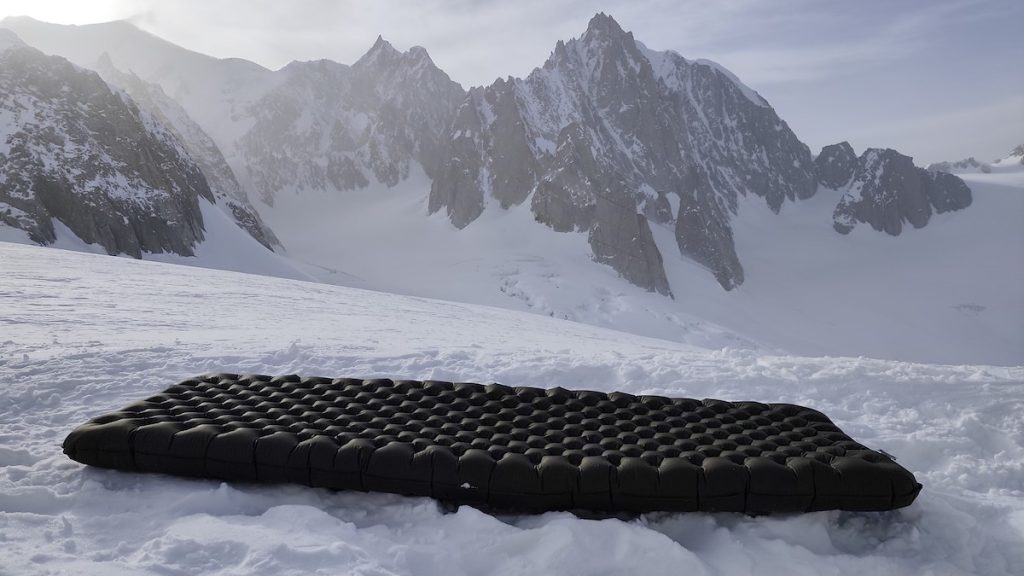
An inflatable sleeping pad designed for bivouacking on snow and in extremely cold conditions. It features high thermal insulation, with an R-value of 7.2 and a thickness of approximately 12 cm, ensuring effective insulation from the ground even on snow. Weighing just under a kilogram, it is less suited for ultralight use, but remains a good compromise for winter mountaineering, expeditions, and bivouacs in cold environments.
Pros
- High insulation
- Comfort
- Generous width
- Built-in stuff sack
- Good insulation-to-bulk ratio
Cons
- Heavy
- Inflating takes a while
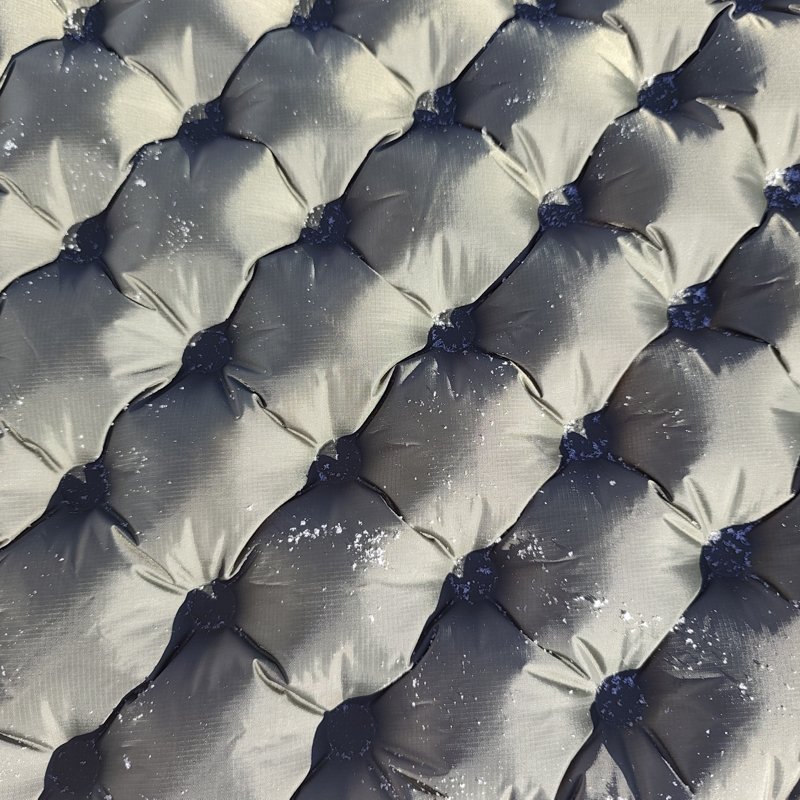
The Arctic Warm was designed to provide effective protection from the ground in the coldest conditions. Its internal structure features three layers of aluminum-coated film, designed to reflect body heat and limit heat loss, achieving an R-value of 7.2—typical of sleeping pads intended for winter use on snow.
When sleeping on snow or frozen ground, most heat loss occurs downward, making the sleeping pad a key component of the insulation system. The materials offer a good balance between durability and weight, while the included pump bag allows for inflation without introducing moisture inside.
A solution consistent with the Ferrino approach, which has always been focused on maximum functionality in the field.
Technical features of Ferrino Artic Warm
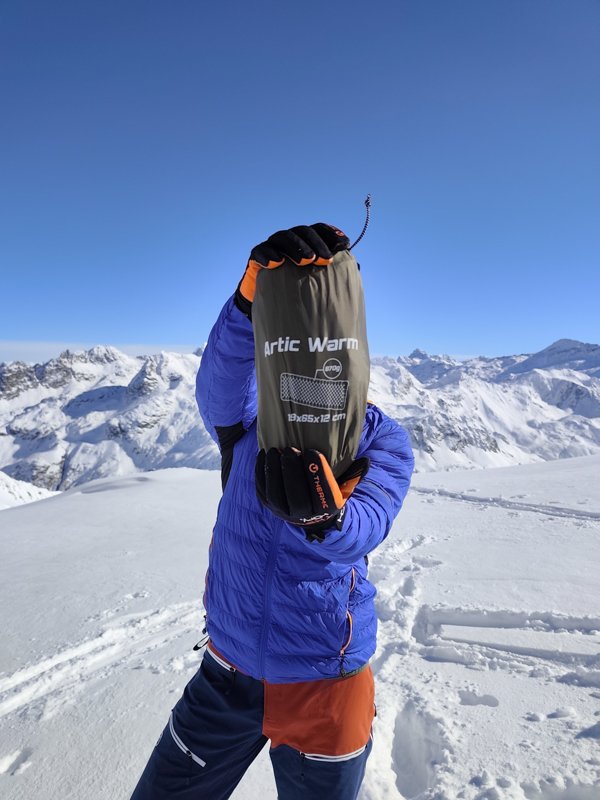
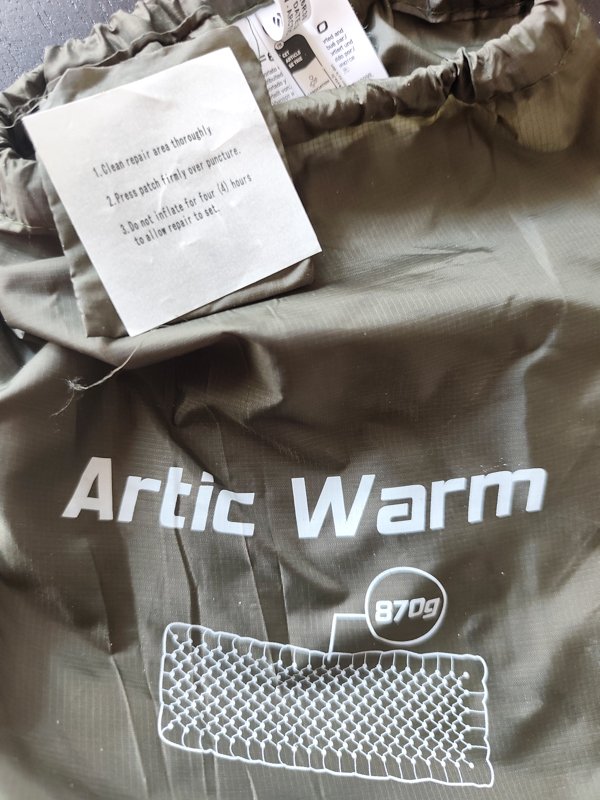
- Mattress weight: 870 g
- Complete kit weight: approx. 960 g
- R-value: 7.2
- Dimensions: 190 × 65 × 12 cm
- Packed dimensions: approx. 25 × 15 cm
- Material: 40D Ripstop Nylon (PFC-free)
- Inflation system: pump bag included
- Insulation structure: 3 layers of internal aluminum-coated film
- One size fits all
- Country of manufacture: China
- List price: €134,90
Test mode
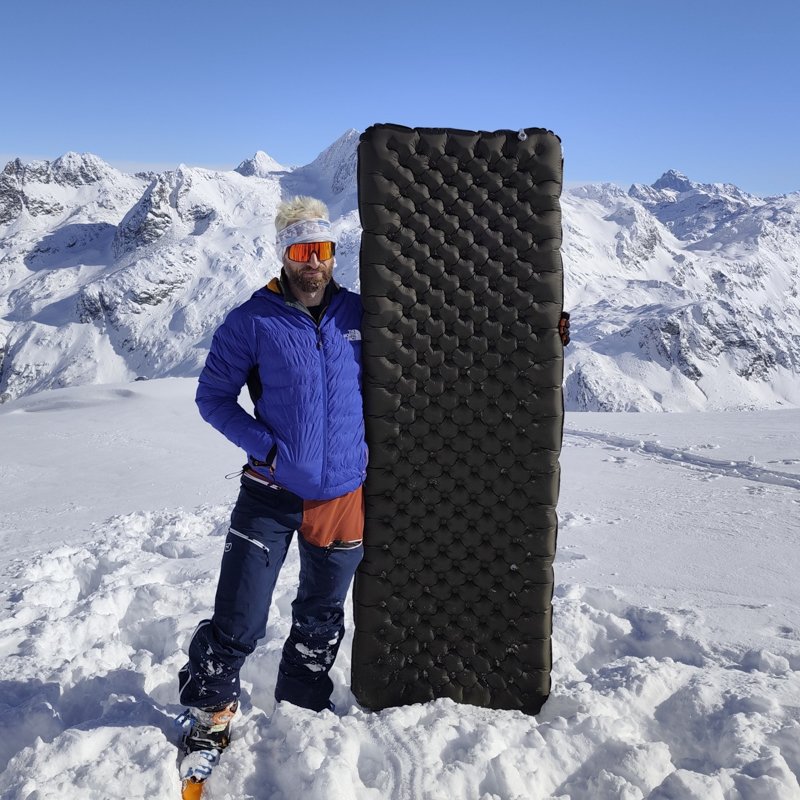
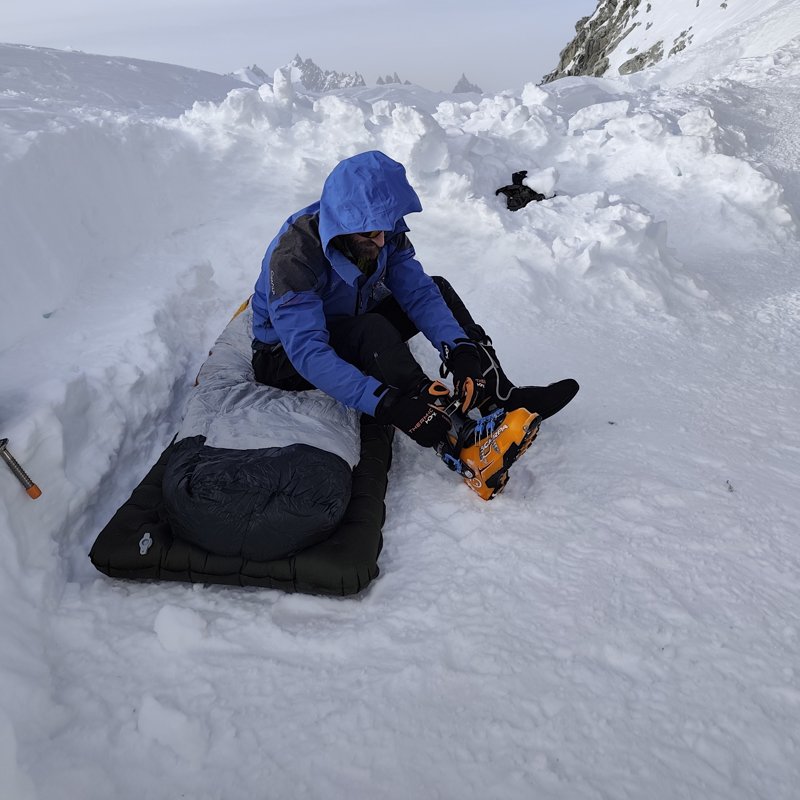
I tested the Ferrino Arctic Warm during several winter mountaineering trips, both on snow and inside indoor winter bivouacs. It was used primarily in tents and on campsites dug into the snow.
Temperatures during the tests ranged from -8°C to -12°C, under typical late-winter alpine conditions: compact snow, moderate humidity, and nighttime condensation.
The mat was used in combination with a winter sleeping bag, without additional protective sheets, allowing for a direct assessment of both comfort and actual insulation from the ground.

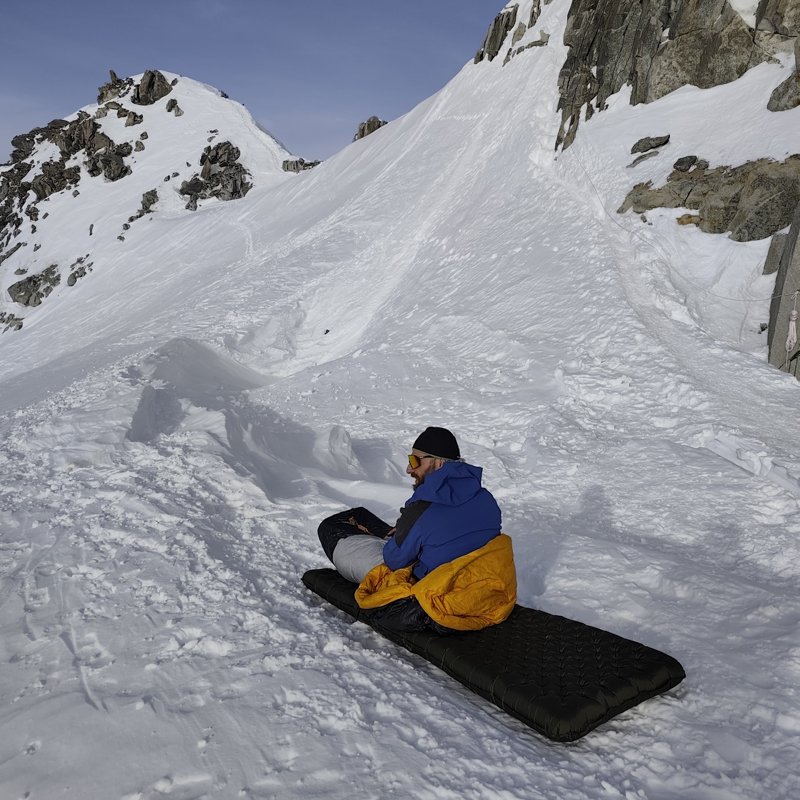
On site test of Ferrino Artic Warm
First Impressions
Once removed from the bag, the Arctic Warm immediately looks like a sleeping pad designed for demanding conditions. Compared to ultralight models, it has a noticeable thickness and a sturdier construction.
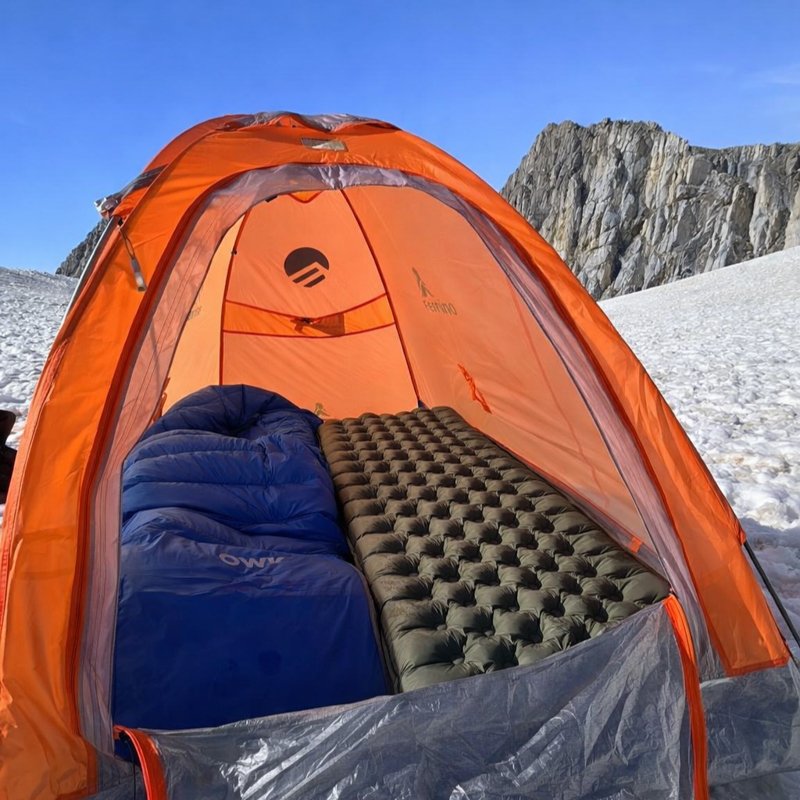
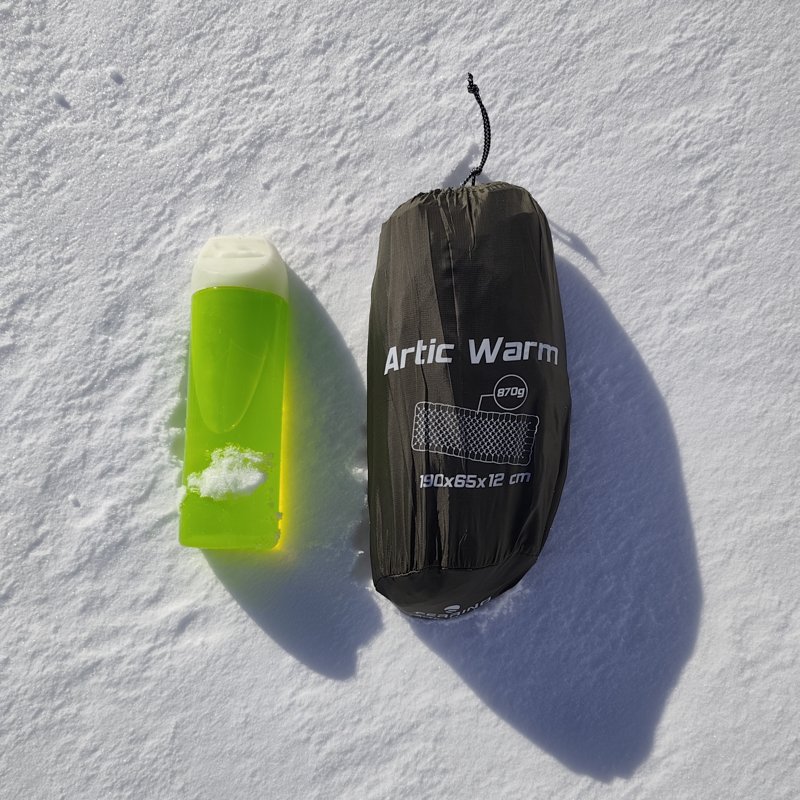
When packed, it takes up about as much space as a large water bottle: it’s not minimalist, but it remains compact given the level of insulation it provides. The ripstop nylon fabric feels solid and durable, while the slight texture on the surface helps keep the sleeping bag in place during nighttime movements.
The width of 65 cm, which is slightly above average, allows you to move more freely without stepping off the sleeping pad.

Inflation phase
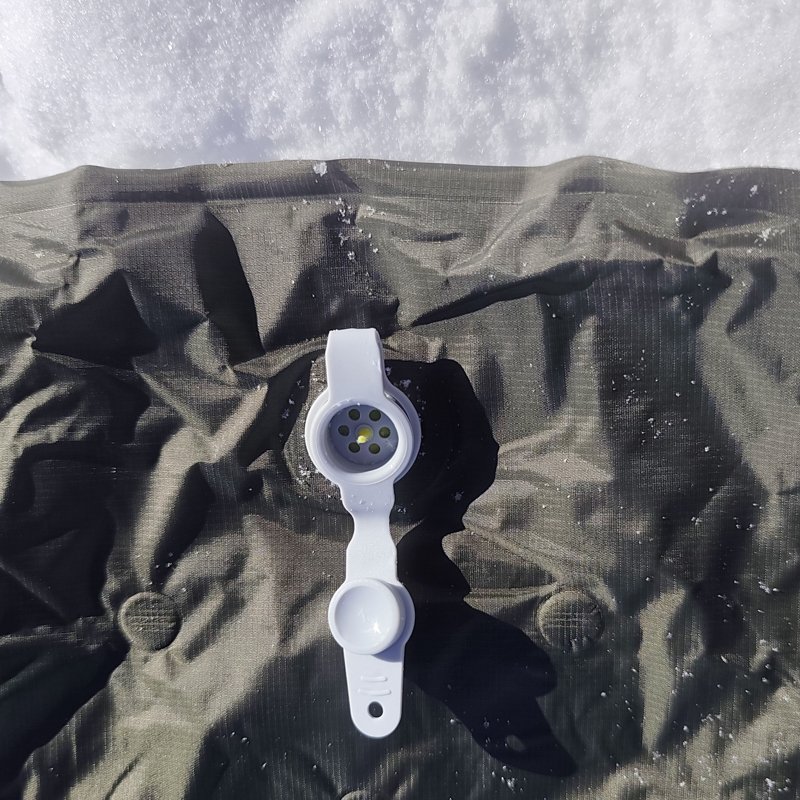
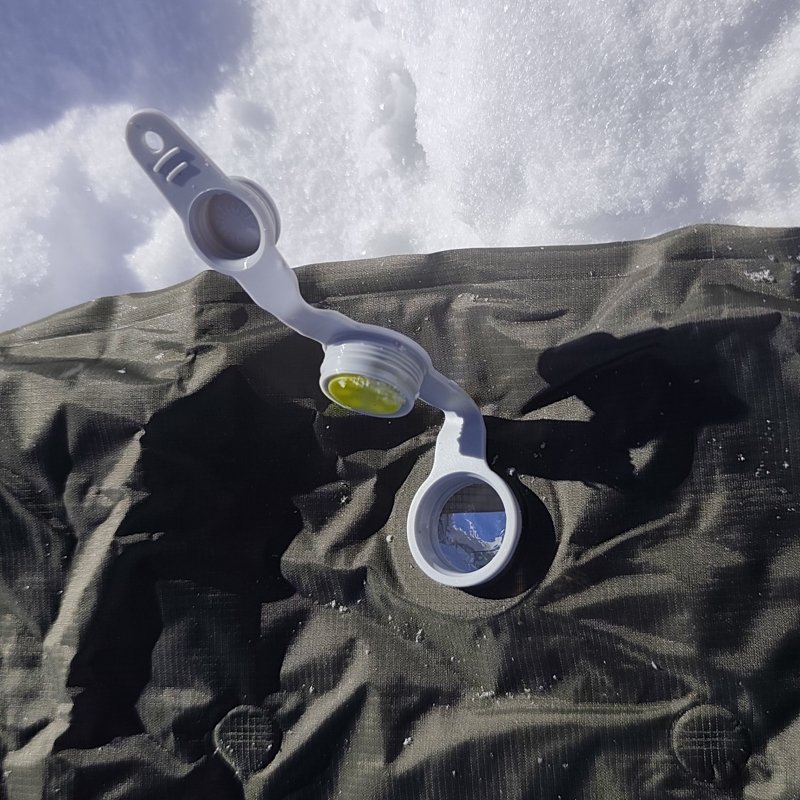
Inflation is performed using the included pump bag, which is connected directly to the valve. You’ll need a little patience to reach the proper pressure: several cycles are required, taking a total of about 6–7 minutes.
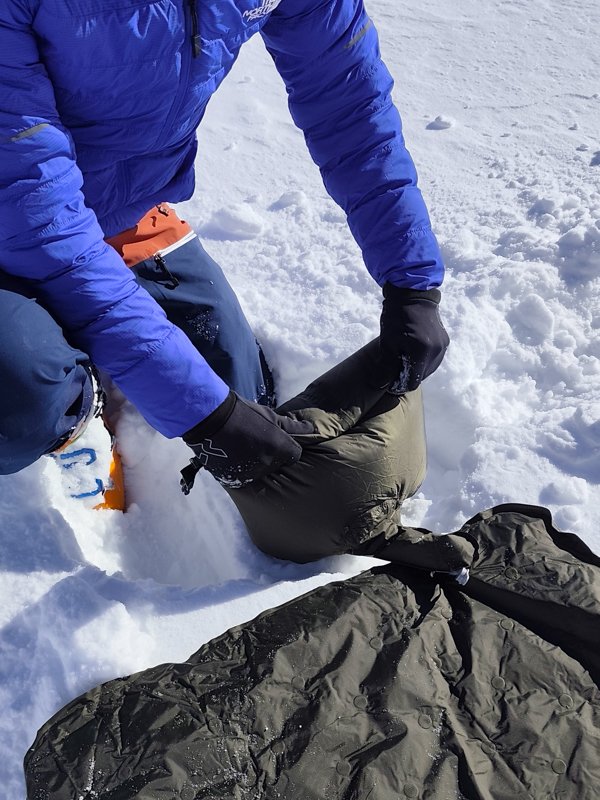
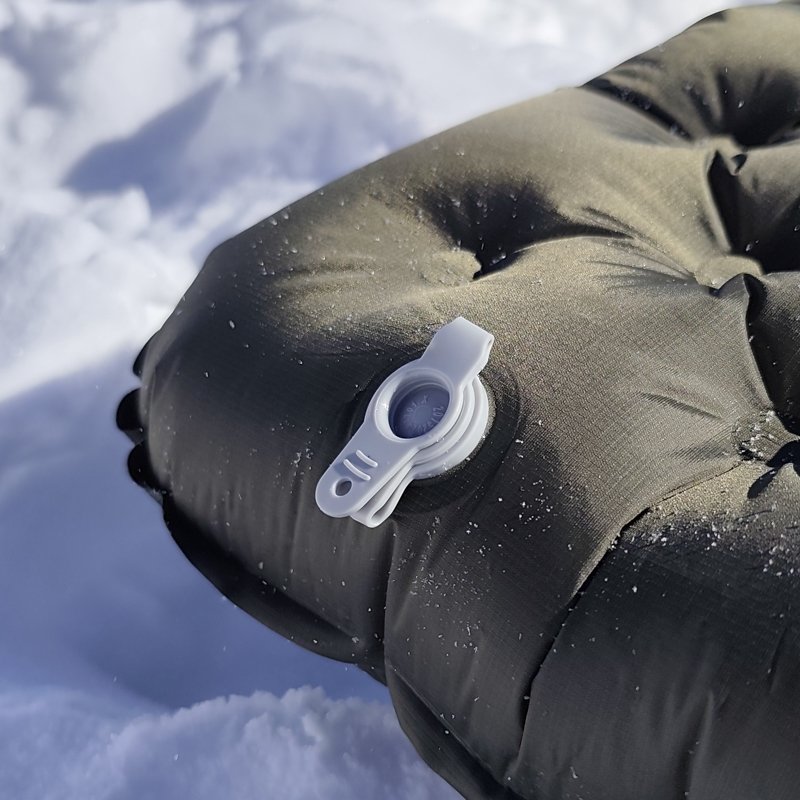
Once inflated, it is helpful to release a little pressure to improve the fit and increase comfort. The pump-bag system also prevents moisture from entering the interior, which is important in cold environments.
Deflating is quick: when you fully open the valve, the air escapes rapidly and the mattress folds up easily. The carrying bag, which is slightly roomy, makes it easy to move the mattress around.
Comfort and thermal insulation
The thickness of approximately 12 cm is one of its main strengths. Even on campsites that aren’t perfectly level, the mat effectively absorbs unevenness in the ground.
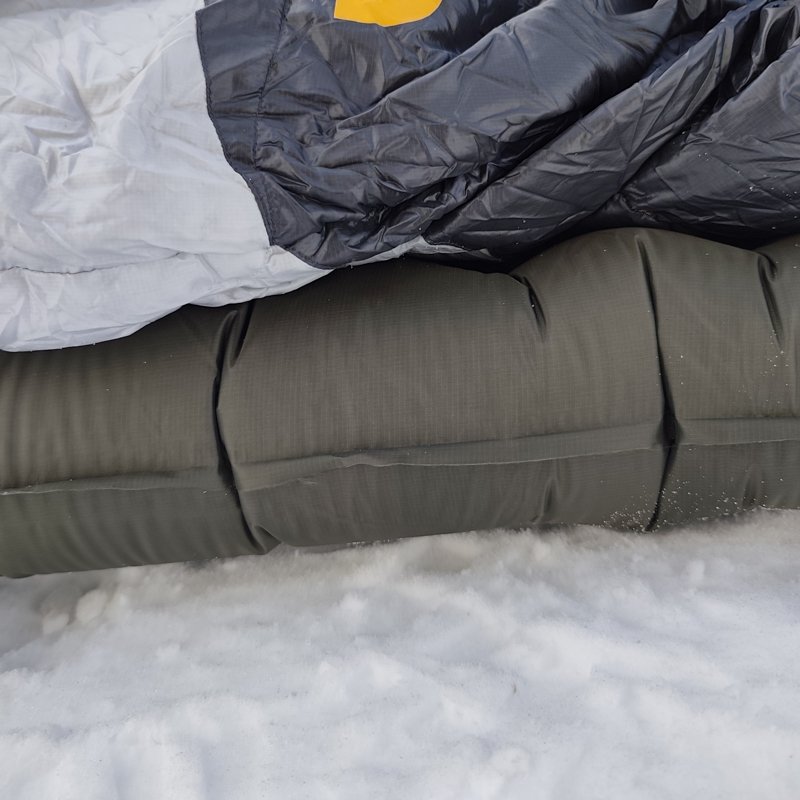
When sleeping on your side, your hip and shoulder sink in without completely compressing the air, preventing contact with the ground.
In terms of thermal performance, it performs exceptionally well: the combination of thickness and a triple-layer aluminum-coated structure creates an effective barrier against the cold of the snow. Even on the coldest nights, you won’t feel the typical loss of heat in the lower back or pelvic area.
The sleeping pad remains stable during movement and does not produce particularly annoying noises.
Durability and Maintenance
No air leaks or sagging were observed during testing. The ripstop nylon fabric offers good abrasion resistance, though careful preparation of the campsite is still recommended.
Once deflated, the mattress folds up easily, returning to the size of the stuff sack. A repair kit is also included, stored in an internal pocket.
Don't miss the next reviews!
Receive product tests for your mountain activities by email.
Recommended for
Ideal for those looking for an inflatable sleeping pad with high thermal insulation for camping on snow and use in cold environments. When paired with a good sleeping bag, it allows you to sleep comfortably even in temperatures well below freezing.
With an R-value of 7.2, it is suitable for winter mountaineering, trekking, and bikepacking in challenging weather conditions and throughout all seasons of the year.


